
Choosing the right LCD display module for construction machinery is a high-stakes engineering decision that directly affects equipment uptime, operator visibility, and long-term system reliability. Unlike consumer products or light-duty commercial devices, construction machinery works in environments where thermal extremes, vibration, dust, and strong ambient light are part of normal operation. A display module in an excavator, loader, or crane must continue to function under cold starts, hot-soak cabin conditions, and constant mechanical stress throughout the machine’s duty cycle.
Choosing a wide-temperature LCD display module for construction machinery requires more than checking the temperature rating on a datasheet. Engineers should evaluate thermal capability together with real-world readability, vibration resistance, electrical stability, and installation conditions. The best module is the one that remains clear, stable, and reliable under the combined thermal, mechanical, and optical stress of the actual machine environment.
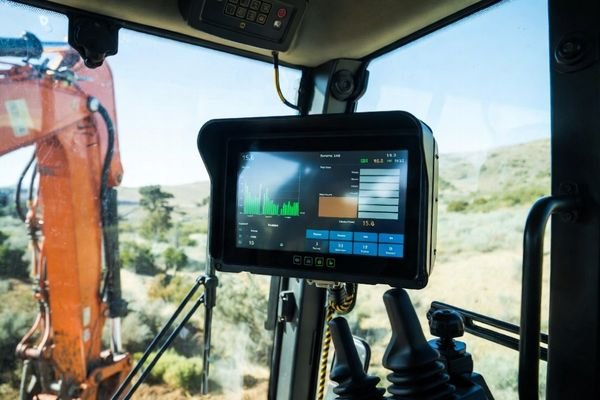
Based on my LCD display module integration work at LCD Module Pro, I have supported numerous OEMs in the construction and agricultural machinery sector. One recurring lesson from these projects is that choosing a display based on a single parameter, such as operating temperature1, often leads to field problems later. The real challenge is not simply finding a module rated for -30°C to +80°C on paper. It is finding one that stays readable, responsive, and electrically stable for the operator throughout daily machine use.
That is why a successful selection process must go beyond the datasheet. A reliable engineering decision should consider the full operating picture: freezing winter starts, high cabin temperatures caused by direct sunlight, constant shock and vibration during machine movement, and unstable power conditions from the vehicle electrical system. In construction machinery, a wide-temperature rating alone is never enough. This article explains the practical engineering factors that matter when selecting a robust LCD display module for this environment.
Why Do Construction Machinery Displays Need Wide-Temperature Performance?
Wide-temperature performance is not a premium extra in construction machinery. It is a basic requirement for dependable HMI operation and field reliability.
Construction machinery operates in environments where large temperature swings are normal, not exceptional. A standard commercial display may suffer from slow response, contrast loss, startup problems, or complete image failure, reducing machine uptime and making critical data harder for the operator to read.
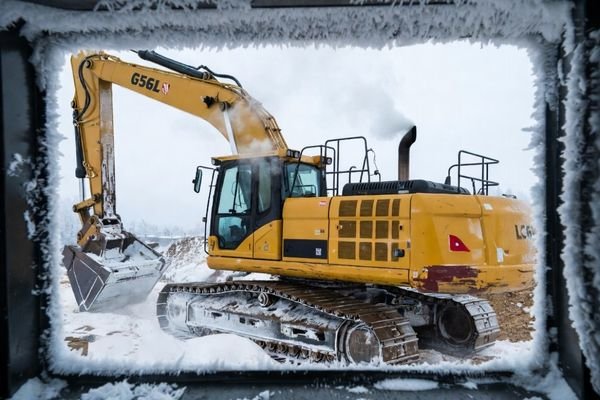
When I work with engineering teams on new machine designs, I always emphasize that the display is a critical part of the operator interface. It must remain functional across weather and workload extremes, because the operator depends on it for diagnostics, machine status, and control feedback.
The Challenge of Cold Starts and Low Temperatures
On a cold morning, the operator needs immediate access to engine status, warnings, and system data. At low temperatures, standard liquid crystal material becomes slower to respond, which can produce severe image lag, ghosting, and delayed visual transitions. In some cases, the backlight may also take longer to start or reach stable brightness. A proper wide-temperature LCD module2 uses liquid crystal material and backlight design intended to maintain better startup behavior and more stable optical response under these low-temperature conditions.
The Threat of High Temperatures and Solar Load
At the other extreme, a machine parked in direct sun can experience cabin temperatures far above the outside air temperature. This heat buildup, combined with direct solar load on the display surface, can push a standard LCD beyond its practical operating limits. In severe cases, the liquid crystal may approach an isotropic state and the display can visually black out. A suitable wide-temperature module uses materials and optical components chosen for better high-temperature resistance, helping the display remain readable during hot-soak conditions and extended summer operation.
Which Temperature Specifications Matter Most When Selecting a Module?
The most important thermal specifications are not limited to the operating and storage temperature ranges shown in a catalog. What matters more is how usable the module remains near those limits.
The key thermal specifications include operating temperature, storage temperature, startup behavior at low temperature, and image stability near thermal extremes. Engineers should also account for the difference between outside ambient temperature and the real in-cabin or in-dashboard temperature the module will experience after installation.
From an engineering perspective, I always advise customers to look past the headline range and examine practical performance near the temperature limits. A module rated to -20°C may still become too sluggish for acceptable operation. A display rated to +70°C may still show unacceptable contrast loss or visual instability under sustained heat. Nominal temperature range is only the starting point. Actual usable performance at temperature extremes is what determines field suitability.
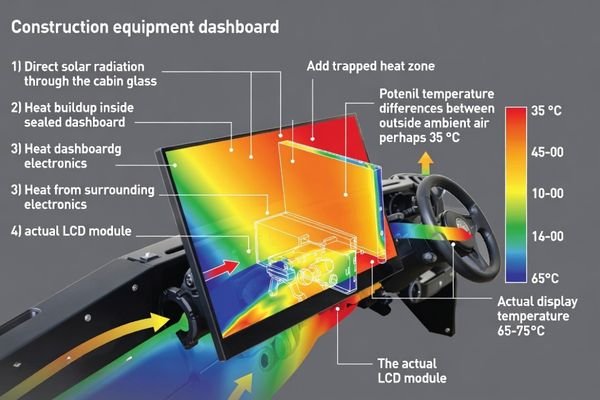
Another common selection mistake is assuming that ambient weather temperature reflects the real thermal load on the display3. In construction machinery, the module is often mounted inside a sealed dashboard structure, exposed to direct sun, and surrounded by electronics that generate additional heat. As a result, the display may experience temperatures far above the outdoor air temperature. For this reason, the real thermal load of the display may be much higher than ambient air temperature, and module selection should reflect the actual installation condition rather than only regional climate data.
What Display Parameters Affect Readability in Harsh Construction Equipment Environments?
A display that survives the temperature range but cannot be read clearly is still the wrong choice. Readability must be treated as a core system requirement together with thermal performance.
The most important readability parameters for construction machinery include brightness, contrast retention across temperature changes, wide and stable viewing angles, and optical surface treatment to reduce reflection. These factors determine whether the operator can still read the display clearly under daylight, cabin glare, dust, and off-axis viewing conditions.
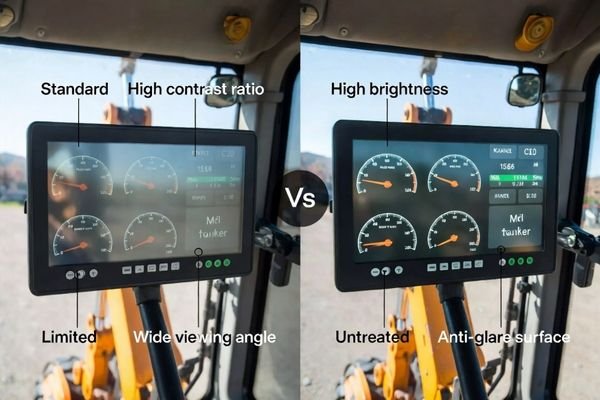
In real integration projects, the operator does not judge the display by its datasheet. The operator judges it by whether engine warnings, hydraulic data, camera feed, and machine status remain visible during actual work. That is why readability, vibration resistance, and power stability should be evaluated together with temperature capability.
| Readability Parameter | Why It Matters for Construction Machinery | Engineering Considerations |
|---|---|---|
| High Brightness | Strong ambient light and direct sunlight can wash out the screen. | In many applications, 800-1500 nits or higher may be needed depending on cabin design and exposure. Brightness stability across temperature should also be checked. |
| Contrast Retention4 | Critical information must remain visually distinct across operating conditions. | Review how contrast shifts at low and high temperature, not only at room temperature. |
| Wide Viewing Angles | Operators do not always view the screen straight on during machine operation. | IPS or other wide-viewing-angle technologies are generally preferred for better off-axis readability. |
| Surface Treatment | Reflections from sunlight, glass, and cabin surfaces can reduce visibility. | Anti-glare treatment and, in some cases, optical bonding can significantly improve practical readability. |
A module that works electrically at high and low temperatures but becomes difficult to read under sunlight is not a successful engineering choice. For construction machinery, sunlight readability, contrast stability, and viewing consistency are just as important as the thermal rating itself.
How Do Vibration, Power Fluctuation, and Mechanical Integration Influence Module Selection?
Construction machinery creates a harsh combination of mechanical shock, engine vibration, long-term structural stress, and unstable electrical conditions. The display module must be selected as part of the full machine integration design, not as an isolated panel specification.
Module selection should account for vibration resistance, connector stability, power fluctuation tolerance, cable routing, and secure mounting design. These factors are as important as temperature range because many field failures come from weak integration around the module rather than from the LCD panel itself.
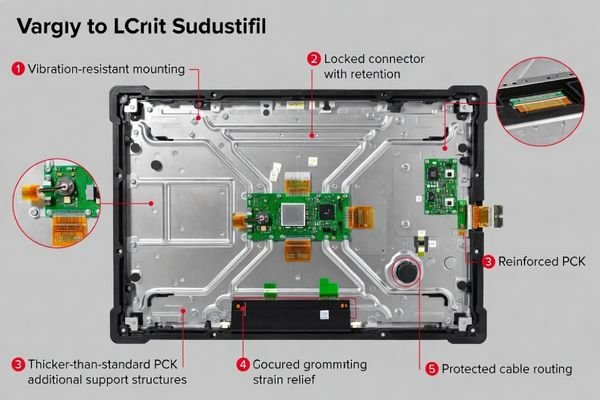
When I troubleshoot field failures, the root cause often turns out to be a mechanical or electrical integration issue rather than a limitation in the LCD glass itself. In many field failures, the real issue is not panel temperature tolerance, but weak system integration around the module.
Shock and Vibration Resistance
Continuous vibration from the engine, hydraulic activity, and machine movement can damage the display system over time. Connectors may loosen, solder joints may fatigue, and unsupported mounting can place mechanical stress on the panel structure. For this reason, engineers should review connector type, fastening method, bracket rigidity, and possible vibration isolation together with the module specification. A display that looks suitable on paper may still fail in the field if the mounting design does not support the operating profile of the machine.
Electrical Stability5
The electrical system in heavy equipment is rarely ideal. Voltage can dip during engine cranking, input power can fluctuate, and electrical noise may be introduced by surrounding loads. In addition, long harness runs can reduce signal quality or increase grounding sensitivity. The display module and its integration design must therefore tolerate unstable power conditions and maintain reliable interface behavior. Power design, signal routing, grounding, and interface robustness should be reviewed early in the selection stage rather than after prototype problems appear. If you need support reviewing power or signal integration for an LCD module, feel free to contact us at info@lcdmodulepro.com.
How Should Engineers Evaluate Wide-Temperature LCD Modules Before Final Selection?
Because construction machinery places combined thermal, mechanical, and electrical stress on the display, final selection should be based on validation rather than on specification review alone.
Engineers should validate candidate modules through cold-start testing, hot-soak testing, real-environment readability checks, and vibration-related integration review. The goal is to confirm stable field performance under realistic conditions, not just to confirm that the module matches a catalog specification.
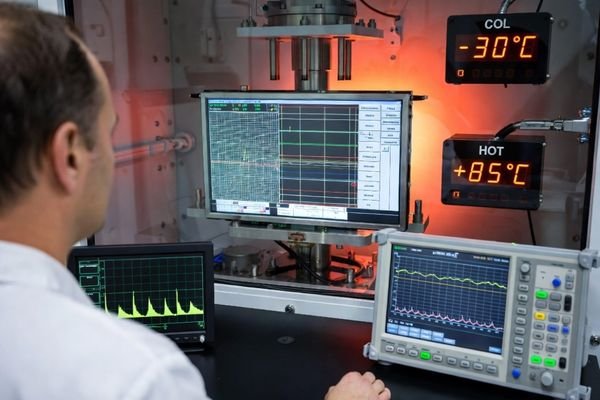
Based on the projects I support, the most reliable approach is to treat the first lab sample as a candidate, not as final proof of suitability. A practical validation sequence usually includes the following steps:
- Baseline Lab Validation: First, confirm that the LCD module works correctly with the target host controller under stable indoor conditions. This establishes a reference point before environmental testing begins.
- Thermal Chamber Testing6: Perform cold-start testing at the expected low-temperature limit and hot-soak testing at the expected high-temperature limit. During these tests, monitor startup behavior, contrast stability, image lag, brightness stability, and overall readability.
- Cabin Readability Verification: Evaluate the module in a cabin mock-up or representative installation environment under bright light and realistic viewing angles. Use the real UI, not just test patterns, to determine whether the display remains readable in practice.
- Vibration and Integration Review: Check mounting stability, connector retention, cable routing, and visual performance under simulated or representative vibration conditions.
The best module is not necessarily the one with the most aggressive datasheet rating. The best module is the one that stays readable and stable in the actual machine environment. In construction machinery, that result usually comes from system-level validation rather than from parameter comparison alone.
FAQ
What is a typical wide-temperature range for construction machinery LCD display modules?
A common industrial range is around -20°C to 70°C, but more demanding applications may require ranges such as -30°C to 85°C depending on installation location, cabin heat buildup, and regional climate.
Is wide-temperature capability enough by itself for construction equipment displays?
No. Wide-temperature capability is essential, but it should be evaluated together with brightness, contrast stability, vibration resistance, electrical stability, and installation design.
Why do LCD modules respond more slowly at low temperatures?
Low temperature changes the behavior of the liquid crystal material and slows pixel response, which can make image transitions appear sluggish or blurred.
Should brightness be considered together with wide-temperature performance?
Yes. Construction machinery often operates under strong daylight, so the module must remain both thermally stable and optically readable in high ambient light.
How should engineers test a module before final approval?
Engineers should validate the module under realistic cold and hot conditions, confirm readability in the intended installation environment, and review stable operation under vibration, power variation, and real interface conditions.
Why is installation location important for temperature selection?
Because the module may experience much higher temperatures than ambient air if it is mounted inside a sealed dashboard, exposed to solar load, or located near heat-generating components.
Conclusion
Choosing a wide-temperature LCD display module for construction machinery requires more than selecting the widest operating range on paper. A reliable engineering decision should combine thermal performance with readability, vibration resistance, electrical stability, and actual installation conditions, because construction machinery subjects the display to multiple stresses at the same time.
At LCD Module Pro, we encourage engineers to evaluate the LCD module as part of the complete machine system rather than as an isolated component. By validating candidate modules under realistic thermal, optical, and mechanical conditions, it becomes much easier to choose a display that protects uptime, supports operator confidence, and remains dependable in the field. The right wide-temperature LCD module is the one that performs clearly, consistently, and reliably in the real working environment of the machine.
✉️ info@lcdmodulepro.com
🌐 https://lcdmodulepro.com/
-
Understanding the impact of operating temperature on LCD performance is crucial for ensuring reliability in harsh environments. ↩
-
Explore this link to understand how wide-temperature LCD modules enhance performance in extreme conditions, ensuring reliability for operators. ↩
-
Calculating the real thermal load ensures optimal display performance in harsh environments, preventing failures and enhancing durability. ↩
-
Learn about the significance of contrast retention in maintaining visibility of critical information under varying temperatures. ↩
-
Exploring this topic will provide insights into maintaining reliable performance in challenging environments. ↩
-
Exploring Thermal Chamber Testing can provide insights into how temperature extremes impact LCD module functionality. ↩