
When equipment is designed for outdoor use or for environments with strong ambient light, display visibility quickly becomes a system-level challenge. A screen that looks perfectly acceptable indoors can become difficult or impossible to read once direct sunlight, reflections, and enclosure heat begin affecting the optical path. This is why the term sunlight readable display matters in equipment development, but it is also why the term is often misunderstood.
A sunlight readable display is not simply a brighter screen. It is a display system engineered to preserve usable contrast and clear visibility under strong ambient light. It achieves that result through a combination of higher luminance, reflection control, optical bonding, and thermal sustainability rather than through backlight brightness alone.
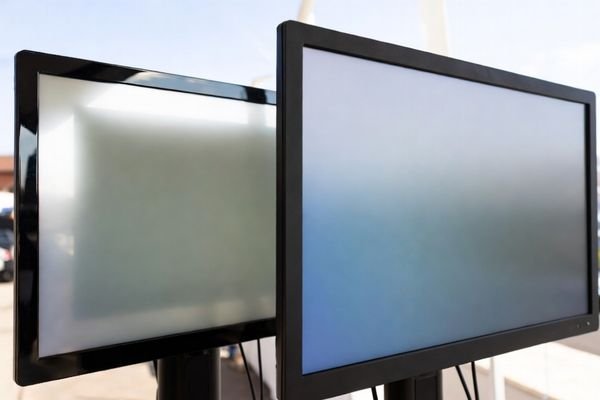
In practical engineering work, sunlight readability is best understood as a system capability, not as an isolated feature. A display can have a high nit rating and still disappoint in the field if reflections remain uncontrolled, if the cover lens structure is poorly matched, or if the enclosure cannot sustain the heat generated by a high-output backlight.
A lot of projects run into trouble because they treat sunlight readability1 as a simple catalog filter. A high-brightness module is selected, the lab result looks promising, and only later does the team discover that the screen still washes out outdoors or that thermal limits inside the enclosure make the brightness unsustainable. Understanding how sunlight readable displays actually work is the first step toward making a better technical decision.
Key points:
- A sunlight readable display is defined by real-world readability, not by brightness alone.
- It works by combining higher luminance with reflection reduction and optical optimization.
- If visibility in strong ambient light is important, the full optical and thermal stack has to be evaluated together.
What a Sunlight Readable Display Really Means
The term sunlight readable is widely used, but its technical meaning is more specific than many product labels suggest. It describes a performance outcome, not a single specification.
A sunlight readable display is a display system that remains usable and maintains visible contrast under strong ambient light. It is defined by real-world readability, which depends on balancing emitted light with effective reflection management.

In real use, the question is not whether the screen is technically on, but whether a user can still read the information clearly under bright exposure. That depends on the contrast the eye perceives in the actual environment, not only on the display’s nominal luminance.
It Is More Than High Brightness
A high-brightness backlight is one of the core ingredients, but it is not sufficient by itself. A display may emit much more light than a standard indoor panel and still appear washed out if the reflected ambient light remains too strong.
It Is About Usable Contrast
The real target is usable contrast2. In strong sunlight, reflections can lift the apparent brightness of dark image areas so much that the image loses separation and clarity. A sunlight readable display is therefore one that keeps the visible difference between bright and dark image regions meaningful in the actual viewing environment.
Why Standard Displays Become Hard to Read in Sunlight
Standard displays usually perform adequately indoors because they are being viewed in controlled lighting. Once they are exposed to direct sunlight or strong ambient light, their limitations become much more obvious.
Standard displays become difficult to read in sunlight because reflected ambient light from the display stack often reduces perceived contrast more severely than the display can compensate for with its own light output.
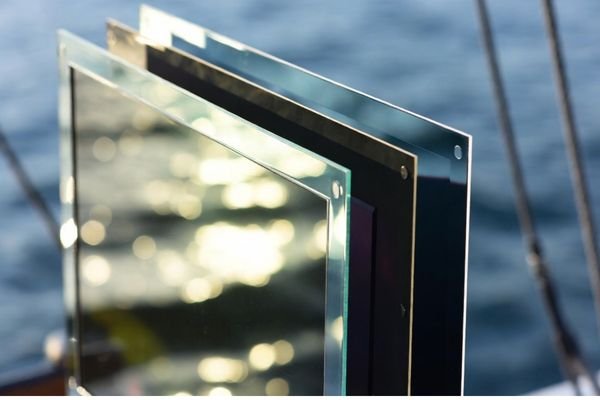
A typical standard LCD module3 may provide 250 to 400 nits of brightness, which can be acceptable indoors. But in bright outdoor conditions, reflected light from the front surface and internal interfaces can overwhelm the image. The result is the familiar washed-out effect where the screen is technically functioning but practically unreadable.
The construction of the display stack also matters. If the system includes a separate cover glass or touch layer with an air gap, there are multiple reflective interfaces:
- the front surface of the lens,
- the back surface of the lens,
- and the front of the LCD itself.
Each reflective surface adds visible noise. The air gap is especially problematic because the refractive-index transition increases internal reflections and reduces effective contrast.
How Sunlight Readable Displays Work
True sunlight readability is achieved through multiple optical strategies working together. Higher brightness is one part of the answer, but it only becomes effective when the rest of the display structure supports it.
Sunlight readable displays work by increasing useful emitted light while reducing reflected ambient light, so that the image remains visually dominant in bright viewing conditions.

Higher Backlight Output
A sunlight readable display usually starts with a stronger backlight. In many equipment applications, brightness may range from roughly 800 nits to 2500 nits depending on the use case. This higher luminance helps the image compete with ambient light, but it does not solve the full problem by itself.
Reflection Control
Reducing reflected light is equally important. Anti-reflective coatings, anti-glare treatments, and lens-structure choices can lower the amount of ambient light returned to the viewer’s eye. That helps preserve visible contrast instead of allowing the display surface to behave like a mirror.
Optical Bonding4
Optical bonding reduces internal reflections caused by the air gap between the display and the front cover layer. By eliminating that gap, the optical path becomes cleaner, contrast improves, and the washed-out effect under strong ambient light is reduced.
Optical Efficiency and Contrast Preservation
Advanced polarizers and other optical films can further improve efficiency and help preserve visible contrast. The real result comes from how all of these elements work together rather than from any single technology alone.
| Technology | Primary Function | How It Improves Readability |
|---|---|---|
| High-Brightness Backlight | Increase luminance output | Helps the image compete with strong ambient light |
| Reflection Control | Reduce front-surface glare | Lowers visible reflected light and improves contrast |
| Optical Bonding | Remove internal air-gap reflections | Improves image clarity and reduces washout |
| Advanced Optical Films | Improve efficiency and contrast | Helps preserve useful image separation in bright conditions |
In our engineering reviews at LCD Module Pro, brightness is rarely treated as a standalone number. We usually assess ambient light exposure, cover-lens structure, viewing distance, reflection behavior, and expected use duration together before deciding whether a standard high-brightness module is enough or whether the optical stack itself needs to change. That review step often prevents teams from choosing a nit target that looks strong in a catalog but still underperforms in the field.
Thermal Design and Reliability Behind High Brightness Performance
A sunlight readable display is not only an optical solution. It is also a thermal and reliability challenge, because the backlight power required for high brightness increases heat generation.
A sunlight readable display must sustain its brightness through proper thermal design. Without effective heat control, high-output backlights can lose performance, age faster, and reduce overall display life.

The Impact of Excessive Heat
Heat is one of the most important factors affecting LED life5. If operating temperature rises too far, brightness maintenance degrades faster, image uniformity may suffer, and the optical stack can age prematurely. Excess heat can also affect the liquid crystal and polarizer materials, causing long-term image-quality problems.
Engineering for Thermal Stability
A stable high-brightness design often depends on mechanical and thermal integration choices such as:
- using structural metal parts to help dissipate heat,
- selecting more efficient LEDs,
- and using smarter backlight-driver strategies to limit thermal overload.
When we evaluate high-brightness projects, we usually check enclosure temperature rise, duty cycle, backlight power, and available heat-spreading paths before treating the target brightness as realistic. In practice, this matters because a display that can briefly reach a brightness goal is not the same as one that can hold that performance reliably over time.
👉 Modules:
For display directions such as high brightness formats and outdoor-oriented module paths → Explore our Modules
👉 Engineering:
For earlier review of optical and thermal constraints in your product → Discuss your custom display project
Common Misunderstandings About Sunlight Readability
Sunlight readability is often reduced to a simple brightness claim, but that interpretation is incomplete.
The most common misunderstanding is assuming that a high nit value automatically guarantees sunlight readability. In reality, real-world visibility depends on the whole optical and environmental system.
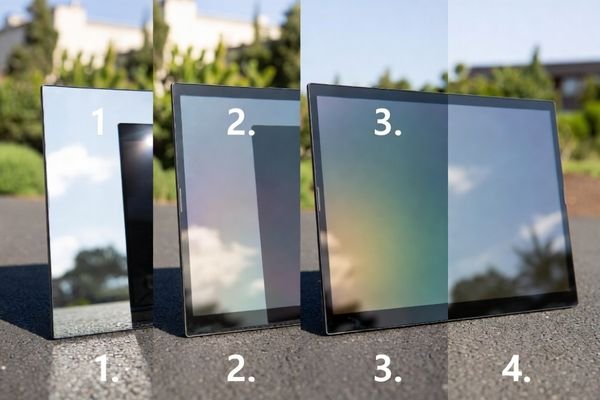
One common mistake is assuming that 1000 nits automatically means the display will be readable outdoors. In some cases that may be enough, but in others it may still fail if reflections remain high or if the lens structure works against the display.
Another misunderstanding is assuming that indoor testing predicts outdoor performance. It does not. Office or lab lighting does not reproduce the optical conditions of direct sunlight, strong side lighting, hot enclosures, or semi-outdoor installations.
The broader mistake is treating sunlight readability as a single catalog specification instead of a system result shaped by:
- luminance,
- reflection control,
- optical bonding,
- lens structure,
- thermal sustainability,
- and the actual viewing environment.
Where Sunlight Readable Displays Are Needed and How to Judge the Requirement
Sunlight readable displays are often needed in applications where bright ambient light is part of normal operation. That does not always mean fully outdoor use.
The requirement should be judged by the real operating environment, not by product category alone.

Common Application Types
Typical use cases include:
- transportation systems,
- marine devices,
- outdoor kiosks,
- industrial equipment near bright openings,
- and semi-outdoor smart terminals.
The common factor is not just location. It is whether the display must remain readable under strong ambient exposure, reflective surfaces, variable viewing angles, or long viewing distances.
How to Judge the Requirement
The better way to judge the need is to look at actual operating conditions:
- How intense is the ambient light?
- Will the display sit behind a cover lens?
- At what angle will it be viewed?
- Is the application indoor, semi-outdoor, or outdoor?
- Does the enclosure create additional thermal stress?
- Is readability critical to safety or core function?
In our project reviews, we usually try to settle this question by comparing the intended environment against the optical assumptions of a standard module before anyone commits too far to a catalog part. That often includes checking whether the product will ever face direct exposure, whether a front lens is mandatory, and whether the required readability is operationally critical or simply preferred.
If those conditions are strong enough that standard brightness and standard optical assumptions no longer provide dependable readability, then a true sunlight readable solution is usually worth evaluating.
👉 Solutions:
To see how application environments such as transportation, marine, industrial, and smart terminal systems shape display requirements → Explore our Solutions
👉 Modules:
To review display directions that support outdoor and high-ambient-light use cases → Explore our Modules
What to Define Before Selecting or Developing a Sunlight Readable Display
A project should not begin with a vague goal like “make it visible outdoors.” The requirement becomes much easier to evaluate when the real operating conditions are defined clearly first.
Before choosing a high-brightness module or moving into a custom evaluation, the project should define the optical, environmental, and thermal conditions that actually shape readability.

What to Define First
The most useful inputs usually include:
- target brightness expectation,
- ambient light conditions,
- cover-lens or touch structure,
- viewing distance and angle,
- enclosure temperature limits,
- duty cycle,
- and service-life expectations.
Why These Inputs Matter
These conditions determine whether a standard high-brightness module is enough or whether the project actually needs a more complete optical and engineering solution. In first-round evaluations at LCD Module Pro, we usually prioritize five inputs first: environment exposure, brightness target, lens structure, enclosure heat limits, and duty cycle. When those five are clear early, the display decision becomes much more structured and the risk of late-stage rework usually drops.
👉 Engineering:
For projects where brightness, optics, and enclosure limits all need to be evaluated together → Discuss your custom display project
FAQ About Sunlight Readable Displays
Is a high-brightness display the same as a sunlight readable display?
No. High brightness is an important part of sunlight readability, but it is not the whole answer. A display can have a higher luminance value and still perform poorly if reflections, lens structure, contrast loss, or thermal limits are not addressed.
How many nits are usually needed for outdoor visibility?
There is no universal number. The required brightness depends on ambient light intensity, reflection level, lens structure, viewing distance, and how much usable contrast the application needs. A value that works in one semi-outdoor application may still be insufficient in another.
Does optical bonding really improve sunlight readability?
Yes, often significantly. Optical bonding reduces internal reflections caused by air gaps, which helps preserve contrast and reduce washout under strong ambient light.
Can a standard display be made sunlight readable later?
Sometimes it can be improved, but usually only partly. Higher brightness alone does not fully solve reflection, thermal, and structural limitations. In many cases, retrofitting a standard display only addresses part of the real visibility problem.
What matters more in sunlight readability: brightness or reflection control?
They should not be separated. Brightness is needed so the display can compete with ambient light, while reflection control is needed to preserve usable contrast. Real sunlight readability depends on both.
Conclusion: Sunlight Readability Is a System Capability, Not a Single Specification
A sunlight readable display should not be understood as a simple brightness label. It is a complete visibility solution shaped by how luminance, reflection control, optical bonding, lens structure, and thermal sustainability work together in the real environment.
Once outdoor or high-ambient-light readability becomes important to the product, the display decision can no longer be based on nit value alone. The correct evaluation has to consider the full optical and environmental stack as one system.
👉 Modules:
To review module directions for high-brightness and outdoor-readable display paths → Explore our Modules
👉 Solutions:
To understand how different applications shape sunlight-readability requirements → Explore our Solutions
👉 Engineering:
For a project-specific review of brightness, optics, and enclosure constraints → Discuss your custom display project
-
Explore this link to understand how sunlight readability impacts display performance and decision-making in engineering. ↩
-
Understanding usable contrast is crucial for evaluating display performance in bright environments. ↩
-
Understanding LCD modules can help you grasp their functionality and applications in various devices. ↩
-
Learn about optical bonding and its impact on display clarity and contrast in challenging lighting conditions. ↩
-
Understanding LED life is crucial for ensuring longevity and performance in lighting applications. ↩