
When selecting an LCD display module for an industrial or commercial device, engineers often focus on core specifications such as resolution, brightness, and interface type. However, surface treatment is also a critical part of display performance because it directly affects readability under real operating conditions. One of the most common surface treatments is anti-glare, or AG. The real engineering question is not simply what AG is, but whether it improves usable clarity once ambient light becomes part of the application.
AG, or anti-glare, is a surface treatment on an LCD module that diffuses reflected ambient light to reduce glare and improve readability in bright environments. Yes, AG can slightly reduce perceived sharpness because of its micro-textured surface, but in many real applications it improves effective clarity by reducing mirror-like reflections that would otherwise obscure the screen.
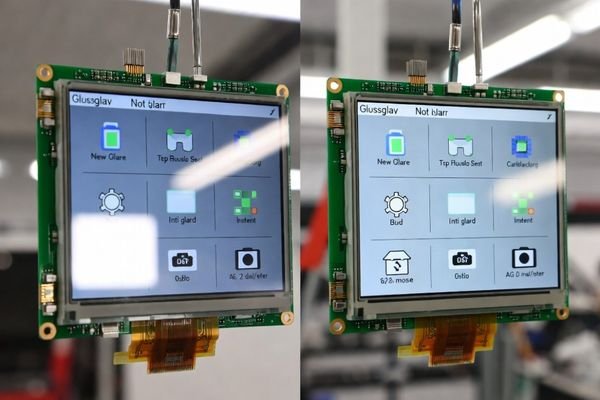
Based on my LCD display module integration work at LCD Module Pro, I have seen many projects where teams debated extensively between a glossy surface and an anti-glare surface1. A glossy display can look extremely sharp and vibrant in a controlled showroom, but the same screen may become difficult to use under factory lighting, near windows, or in other bright environments. AG is designed to solve that practical problem.
The key point is that AG is not just a cosmetic preference. It is a functional optical choice intended to improve field usability. The decision to use AG should be based on the real operating environment of the product rather than on appearance under ideal viewing conditions. In many industrial and commercial applications, the goal is not maximum theoretical sharpness in a dark room, but stable readability in uncontrolled lighting. That is why AG should be evaluated as part of a complete optical and usability strategy.
What Does AG Mean on an LCD Display Module?
AG stands for anti-glare, a functional surface finish used to reduce one of the biggest threats to screen readability: reflected ambient light.
On an LCD module, AG is a surface treatment that uses a microscopic texture to scatter incoming ambient light, reducing sharp mirror-like reflections and making the display easier to read in bright environments. In practical terms, AG is used to improve real-world readability rather than to change the appearance of the module for aesthetic reasons.
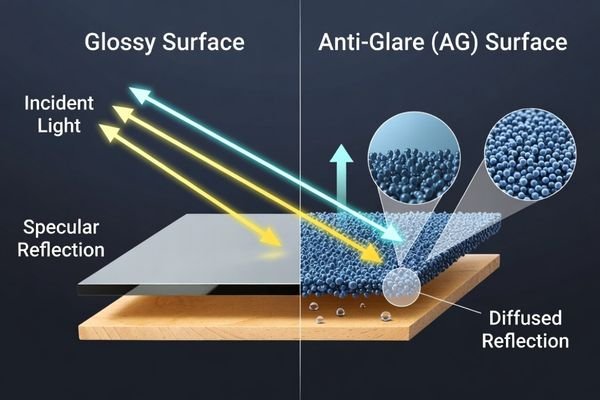
When I work with system integrators, I emphasize that AG is fundamentally about field performance rather than just appearance on a specification sheet.
AG for Enhanced Usability
In environments with strong ambient light, such as outdoor kiosks, vehicle dashboards, factory floors, or sunlit retail spaces, a glossy display can reflect the light source directly back to the viewer. These specular reflections can make the screen difficult to read and, in some cases, almost unusable. An AG surface breaks up these reflections by diffusing the reflected light, turning a sharp and distracting glare into a softer and less concentrated haze. This improves screen readability and can also reduce visual fatigue for the operator.
AG as a Strategic Engineering Choice
From an engineering standpoint, selecting AG is a deliberate optical design decision2. It should be chosen based on the expected lighting environment, typical viewing distance, display content, and user interaction pattern. In an industrial control interface, for example, readability under variable ambient light is often more important than showroom sharpness. In many field applications, AG provides a net gain in usable visual performance, which is why it is frequently treated as a functional requirement rather than an optional surface preference.
How Does an AG Surface Actually Work?
The principle behind anti-glare is straightforward: it reduces visible reflections by disrupting the smoothness of the outer display surface.
An AG surface uses a micro-textured finish to scatter reflected ambient light in many directions. Instead of sending back a concentrated, mirror-like reflection, the surface diffuses the reflected light, which reduces glare intensity and makes the displayed image easier to see.
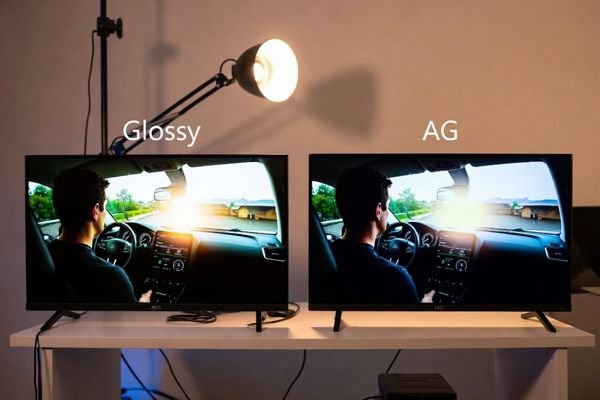
In engineering terms, the performance of AG comes from controlled surface roughness. A glossy surface behaves like a uniform reflector, so ambient light returns in a predictable direction and creates a strong specular reflection. An AG surface introduces many microscopic angles across the top layer, causing incoming light to scatter rather than reflect sharply toward the viewer.
This diffusion is what reduces glare, but it also explains the clarity trade-off. The same surface texture that diffuses reflected ambient light can also slightly diffuse the light emitted by the LCD pixels as it exits the display stack. That is why AG may soften pixel edges or reduce the “glass-like” crispness associated with glossy surfaces. The level of diffusion is often described by haze, and selecting the correct haze level3 is an important engineering decision. Higher haze generally improves glare reduction but can have a greater effect on perceived image sharpness. For demanding applications, the right AG level should be selected according to the actual use environment, UI design, and optical priorities. For detailed optical performance discussions, feel free to reach out to us at info@lcdmodulepro.com.
Does AG Reduce Reflections at the Cost of Image Sharpness?
Yes, AG does involve a trade-off, but the practical meaning of that trade-off depends on the application. The more important question is whether AG improves overall readability under real lighting conditions.
AG treatment does trade some perceived sharpness for glare reduction. The micro-textured surface that diffuses ambient reflections can also slightly soften the appearance of pixel edges, making the display look less crisp than a glossy surface. However, in bright environments, AG often improves effective clarity because it reduces reflections that would otherwise obscure the screen content.

Based on the projects I support, the AG-versus-clarity discussion should always be resolved by examining the actual operating environment rather than by comparing screens in a dark room.
| Surface Type | Performance in Low Light / Dark Room | Performance in Bright Ambient Light | Key Trade-Off |
|---|---|---|---|
| Glossy4 | Appears very sharp, with strong contrast and vivid color presentation. | Suffers from strong mirror-like reflections that can hide screen content. | Maximum showroom sharpness, but reduced usability in bright environments. |
| Anti-Glare (AG) | May appear slightly softer, with somewhat reduced visual crispness. | Significantly reduces distracting reflections and improves readability. | Better real-world usability, with a modest trade-off in perceived sharpness. |
The critical engineering insight is that sharpness alone does not define readability. A perfectly sharp image is not useful if glare prevents the operator from seeing it clearly. In many industrial and commercial environments, AG provides better practical clarity by preserving visibility when ambient light cannot be controlled. That is why AG should be judged by usable performance in the field rather than by close-up appearance in ideal indoor conditions.
What Other Optical Factors Influence the AG and Clarity Trade-Off?
The effect of AG on image quality should never be judged by surface texture alone. Final display performance depends on the complete optical system.
The perceived impact of AG on clarity is shaped by the full optical stack, including panel resolution, viewing distance, optical bonding, contrast performance, and other surface treatments. AG should be evaluated as one part of the total display design rather than as an isolated variable.
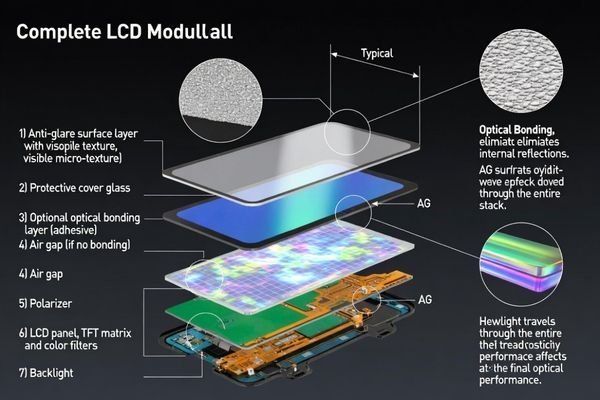
When I troubleshoot field issues on LCD modules, I always review the full optical path, because a single visual complaint is rarely caused by one layer alone.
The Role of Optical Bonding
Optical bonding fills the air gap between the cover lens and the LCD module with a clear adhesive. This reduces internal reflections, improves contrast, and helps the image appear closer to the display surface. In a module using AG, optical bonding can improve the overall visual result by reducing internal light scatter and strengthening perceived contrast. In many cases, this helps offset some of the softness that users might otherwise associate with anti-glare treatment.
The Impact of Resolution and Viewing Distance
The visible effect of AG also depends on pixel density5 and normal viewing distance. On a high-resolution display viewed at the intended operating distance, a light AG treatment may have little or no meaningful effect on perceived sharpness. On a lower-resolution display viewed up close, however, a stronger AG texture may be more noticeable. This is why the clarity trade-off of AG should be evaluated with the full optical stack, not as an isolated surface property.
How Should You Decide Whether AG Is the Right Choice?
The decision to use AG should be driven by real operating conditions rather than by a general preference for glossy or matte-looking screens.
Choose AG based on the actual lighting environment and usability requirements of the product. If the LCD display module will operate under strong or uncontrolled ambient light, the readability benefits of AG will often outweigh the slight reduction in perceived sharpness.

From an engineering standpoint, I usually guide clients through a structured decision process so the final surface choice reflects the real performance target of the product.
- Analyze the Environment: Will the display be used outdoors, near windows, under bright ceiling lights, or in other high-ambient-light conditions? If yes, AG is often a strong candidate and may be essential for readability.
- Define the Visual Task: Is the display used for quick status checks, dashboards, operator guidance, or fine-detail visual work? If readability and low reflection are the priority, AG often offers a better result in practice.
- Consider the Full Optical Stack: Optical bonding, panel resolution, contrast performance, and viewing distance all influence how much AG affects perceived clarity.
- Test in Real Conditions: The best evaluation is done in the intended use environment with the actual UI content, at the intended viewing angle and distance. This is far more reliable than making a decision based on a dark-room comparison.
In actual industrial integration, readability under ambient light6 is usually more important than showroom sharpness. The best engineering decision is the one that delivers consistent visual usability under real operating conditions rather than the one that looks most impressive under ideal lighting.
FAQ
What is the main purpose of AG on an LCD display module?
The main purpose of AG is to reduce surface glare from ambient light so the screen remains easier to read in bright environments.
Does AG always make a display look less sharp?
Not always in a meaningful way. AG can slightly reduce perceived sharpness, but in many real applications it improves overall readability by reducing reflections.
Is AG the same as AR coating?
No. AG reduces glare by diffusing reflected light, while AR (Anti-Reflective) coating reduces reflection through optical interference. They are different technologies that can sometimes be used together.
Is AG recommended for outdoor or high-ambient-light applications?
In many cases, yes. AG is often a key component for displays used in environments with strong ambient light, though it should be combined with brightness, contrast, and optical design considerations for best results.
Can AG be combined with optical bonding?
Yes. AG and optical bonding are often used together. Optical bonding reduces internal reflections and improves contrast, which can enhance the practical performance of an AG-treated display.
How should engineers evaluate AG during module selection?
Engineers should assess AG under realistic lighting conditions, using the actual user interface and at a normal viewing distance, rather than relying on close-up comparisons in controlled indoor lighting.
Conclusion
AG on an LCD display module is an anti-glare surface treatment designed to improve real-world readability by reducing reflected ambient light. Yes, it can slightly reduce perceived sharpness, but in many practical applications it improves effective clarity because the screen remains visible under lighting conditions that would make a glossy display much harder to read.
At LCD Module Pro, we recommend evaluating AG as part of the full optical stack rather than as a standalone surface feature. Resolution, optical bonding, viewing distance, and ambient light all influence the final result. The right engineering choice is not simply the surface that looks clearest in ideal conditions, but the one that delivers the best balance of sharpness, glare control, readability, and usability in the intended application. For products used in real-world lighting, AG is often not a compromise in performance, but a necessary part of making the display function reliably.
✉️ info@lcdmodulepro.com
🌐 https://lcdmodulepro.com/
-
Explore this link to understand how anti-glare surfaces enhance usability in various lighting conditions. ↩
-
Exploring optical design decisions can provide insights into engineering choices that enhance user experience and functionality. ↩
-
Exploring haze level impacts can help you make informed decisions for enhancing visual quality in demanding applications. ↩
-
Learn about the challenges of glossy screens in bright settings and their impact on usability. ↩
-
Exploring pixel density will provide insights into display performance and help you make informed decisions in your work. ↩
-
Understanding these factors can help you choose the right display for real-world conditions, ensuring optimal performance. ↩