Engineering-Driven Industrial LCD Module Solutions

We help equipment manufacturers develop custom industrial LCD modules that are special-shaped, high-brightness, and integration-ready. From mechanical feasibility and optical performance to interface compatibility and long-term reliability, our engineering team reduces project risk early and supports stable delivery from prototype through production.

What Engineering Problems We Solve

Industrial display projects often fail not because of the LCD panel itself, butbecause engineering risks are discovered too late.Our role is to identify and solve these risks early.

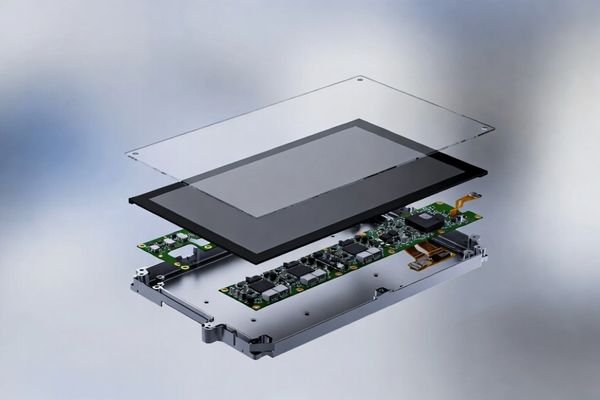
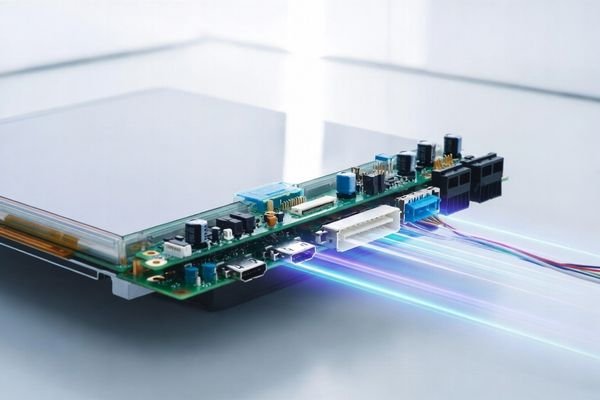
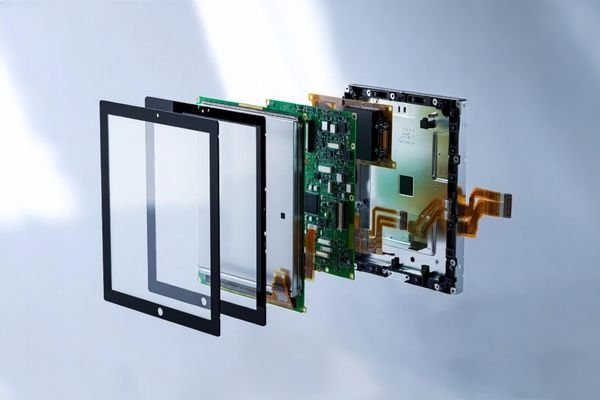
Exploded-view rendering of an LCD module stack with frame, glass, panel layers, backlight, and driver PCB, showing engineering integration structure without labels.

Special-Shaped IntegrationChallenges

When standard displays don’t fit your product design:

We deliver:

We evaluate mechanical feasibility, active area redesign,backlight re-configuration, and assembly structure tomake sure your special-shaped LCD module can truly bebuilt and integrated.

High-Brightness Optical Challenges

When visibility and lifetime both matter:

We deliver:

We engineer high-brightness backlight systems, opticalbonding structures, and thermal solutions to achieveindustrial-grade visibility with stable performance.

Interface & System Compatibility

When the display must work reliably inside a real system:

We deliver:

We help ensure your LCD module fits your electronicsplatform and works consistently.

Mechanical & Assembly Constraints

When the module must fit into your housing:

We deliver:

We design LCD modules as part of your product, not asisolated components.

Industrial Reliability Requirements

When your product must work long-term in real

Principle:

Reliability is engineered into the solution, not assumed

Core Engineering Capabilities

Engineering capability matters only when it reduces integration surprises and keeps performance stable beyondsamples.

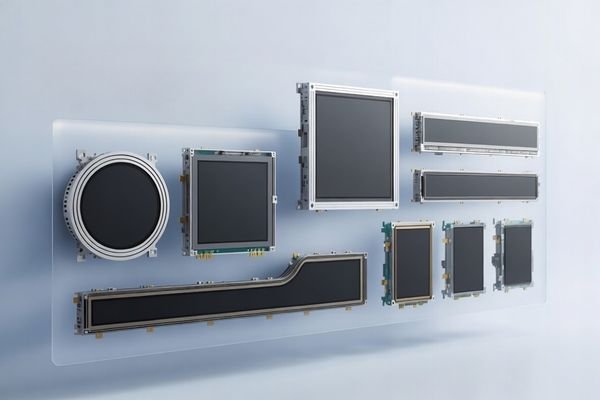
Special-shaped industrial LCD module prototypes on an engineering bench, showing ultra-wide and irregular formats with fixtures and backlight parts.

Special-Shaped LCD Module Engineering

RISKS REDUCED

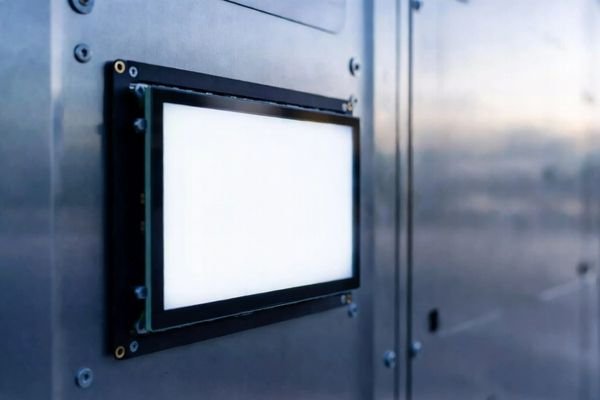
High-brightness industrial display module with cover glass alignment for optical bonding and anti-reflection surface evaluation in a clean lab setting.

High-Brightness & Optical Engineering

RISKS REDUCED

Industrial LCD module connected to a driver board with clean interface cabling, with test instruments in the background for signal stability and EMC review.

Electrical & Interface Engineering

RISKS REDUCED

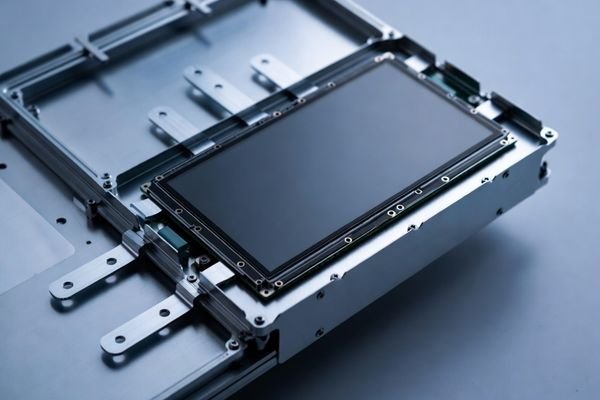
Industrial display module assembled with cover glass and touch layer on mounting hardware, illustrating thickness control and front panel integration.

Mechanical & Structural Integration

RISKS REDUCED

Multiple industrial LCD modules running aging tests on test racks to verify long-term stability and performance.

Reliability & Industrial Validation

RISKS REDUCED

Engineering Process

Engineering Workflow

Our engineering process is designed to reduce uncertainty and support long-term industrial projects.

  • Reduce late-stage integration surprises through early constraint checks.
  • Turn requirements into verifiable builds with clear acceptance criteria.
  • Maintain continuity through pilot validation, change control, and supply planning.
Engineering responsibility does not end after samples.
Engineering workflow image showing a five-step process for industrial display projects
Step 1

Requirement & Feasibility Review

Align requirements and constraints early to prevent late rework.

  • Application & environment
  • Size & mechanical envelope
  • Brightness & power budget
  • Interfaces & project stage
Step 2

Engineering Proposal

Propose a verified approach with risks, mitigations, and clear alternatives.

  • System architecture
  • Mechanical / optical stack
  • Key risks & mitigations
  • Options & trade-offs
Step 3

Sample Development

Build and iterate prototypes to confirm performance and integration assumptions.

  • Engineering samples
  • Functional prototypes
  • Verification builds (DVT)
  • Test results & revisions
Step 4

Pilot Run & Validation

Run a pilot build to validate consistency and system-level behavior.

  • Pilot build (small batch)
  • Unit-to-unit consistency
  • System integration checks
  • Validation report & sign-off
Step 5

Production Support

Support production with stable builds, change control, and long-term continuity.

  • Manufacturing coordination
  • Change control (ECO)
  • Supply continuity planning
  • Ongoing technical support

Engineering + Supply Chain System

We operate as an engineering-driven solution provider supported by a qualified manufacturing ecosystem. This system keeps engineering flexible while maintaining production reliability across sourcing, manufacturing control, quality coordination, and long-term supply planning.

Our Supply Structure

We work with a controlled manufacturing network covering the processes required for industrial LCD module delivery.

Network Coverage

  • Industrial LCD panels
  • Backlight & high-brightness systems
  • Special-shaped processing
  • Optical bonding
  • LCD module assembly

Partner Selection Criteria

  • Form factor and structure
  • Brightness and optical level
  • Reliability requirements
  • Project stage and volume

How We Keep It Controlled

  • Qualified partners: apply the right capability set for each process route.
  • Traceable routes: keep BOM and process choices transparent across stages.
  • Change control: manage substitutions as an engineering decision, not an ad-hoc swap.
Controlled network coverage, matched to project constraints.

Engineering-Controlled Manufacturing

Manufacturing is managed as part of the engineering process—checkpoints, traceable changes, measurable outcomes.

Feasibility evaluationConfirm constraints early.
Structural & optical definitionLock key parameters.
Sample build coordinationCoordinate the process route.
Pilot batch validationValidate repeatability.
Production change controlKeep updates controlled.
Manufacturing is not a black box—engineering stays accountable.

What This System Delivers

An engineering-integrated supply system designed to reduce uncertainty from prototype through mass production.

  • Consistency from samples to production
  • Predictable performance and quality
  • Reduced redesign and rework risk
  • Stable long-term supply support
Fewer surprises, more controllable delivery.

Our Positioning

Engineering-driven industrial LCD module solution provider, secured by a controlled manufacturing ecosystem.

  • Engineering-driven solution provider
  • Controlled manufacturing ecosystem
  • Long-term industrial project support
→ Engineering-driven solutions, secured by controlled manufacturing.

Why Engineering-Driven Matters

An engineering-driven approach helps equipment manufacturers achieve measurable outcomes in development, integration, and long-term performance.

BEFORE

Without an engineering-driven approach

Risks are often discovered late, when changes are expensive and schedules are already committed.

  • Longer development cycles caused by rework
  • Recurring integration issues during late-stage bring-up
  • Higher redesign risk after mechanical or thermal conflicts appear
  • Unpredictable performance across revisions or deployments
  • Inconsistent long-term behavior in real environments
  • Project cost becomes harder to control over time
AFTER

With an engineering-driven approach

Engineering makes the project clearer, safer, and more controllable by validating critical risks early.

Shorter development cycles
Fewer integration issues
Lower redesign risk
More predictable performance
Better long-term consistency
More controllable total project cost

We focus on engineering not to make projects complex, but to make them clearer, safer, and more controllable.

FAQ

Share your target display size, expected resolution/interface, brightness target, environment (indoor/outdoor), mounting constraints, and your current project stage. A simple sketch or enclosure outline is very helpful.

Yes. We typically start by confirming the active area, corner radius/cutouts, bezel limits, and mechanical tolerance stack-up, then align on feasible tooling and validation steps.

It depends on viewing conditions. We align on your ambient light and viewing distance, then propose a target luminance range and verify readability with a practical acceptance method.

Outdoor-facing designs usually require stronger optical control (reflection management), thermal strategy (sun load), ingress protection expectations, and long-term stability considerations.

The key items are mechanical envelope, connector orientation and strain relief, cable routing, heat dissipation path, mounting points, and serviceability. Confirming these early avoids late redesign.

Yes. We can review your enclosure and mounting concept, identify risk items (warpage, stress points, tolerance risks), and propose a verification plan that can be executed with early prototypes.

We usually go from requirement definition → feasibility and risk review → sample/prototype → integration validation → pilot build → acceptance criteria sign-off. The goal is predictable performance before scaling.

We confirm your source output, timing requirements, cable length, and EMI constraints, then lock a compatible baseline configuration and define how it will be verified during integration tests.

Start an Engineering Discussion

If your project involves:

  • Special-shaped or non-standard displays
  • High-brightness or outdoor-facing requirements
  • Structural or integration constraints
  • Custom industrial LCD module development

We invite you to start an engineering-level discussion.
Tell us about your application, size expectations, brightness requirements, and current project stage.

Ask For A Quick Quote

We will contact you within 1 working day, please pay attention to the email with the suffix “@lcdmodulepro.com”