
Display modules engineered for vehicle systems and transportation equipment — built for sunlight, vibration, irregular mounting spaces, and long service life.
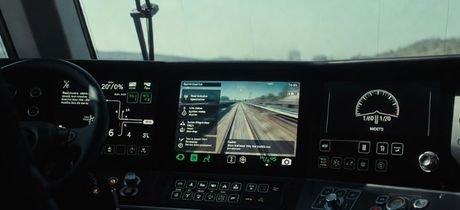
This solution is for vehicle systems, onboard devices, mobile industrial platforms, transportation terminals, and traffic-related equipment where displays must operate in moving environments and variable outdoor conditions.
Standard LCD modules are often not sufficient for these applications. We support project teams by developing high-brightness, special-format, and environment-adapted LCD modules engineered for real-world mobile operation.
→ Start from your operating environment, not from a standard screen.
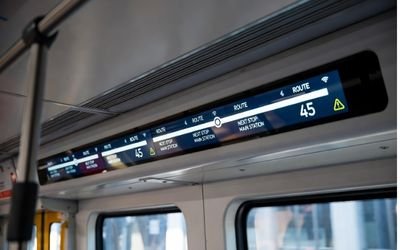
Transportation equipment places strong environmental and structural demands on display modules
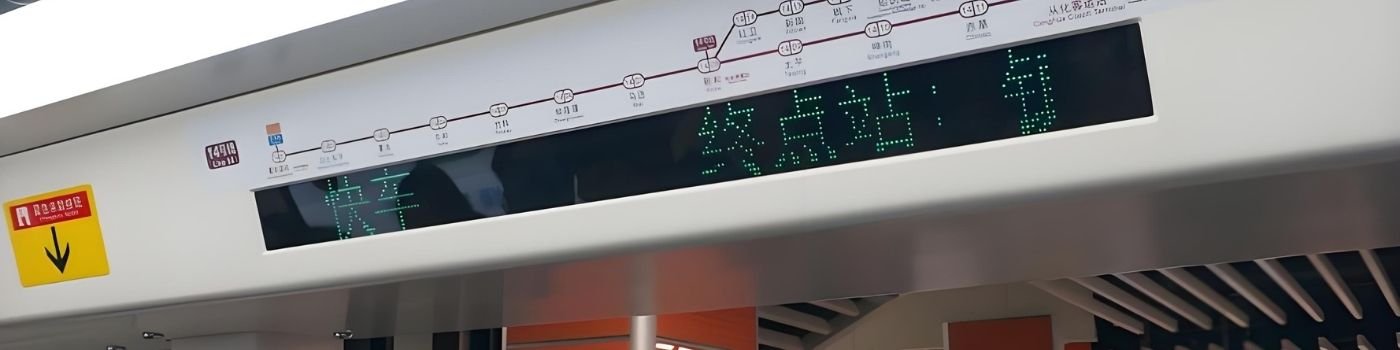
Cabins, stations, and roadside equipment face sunlight and reflections. Readability must hold under changing conditions.
Engineering focus: brightness / optical stack / reflection control
Vehicle systems face continuous vibration and occasional impact. Displays must stay stable and readable over time.
Engineering focus: mechanical stability / retention / shock tolerance
Wide temperature ranges and compact housings increase thermal and structural risk for the module.
Engineering focus: thermal behavior / material reliability / lifetime
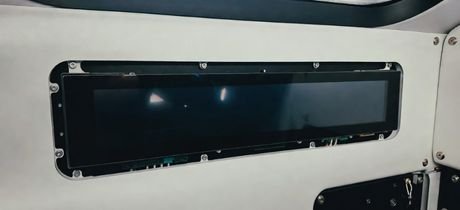
Dashboards and onboard systems rarely match standard layouts. Custom proportions and outlines are often required.
Engineering focus: custom outline / mounting adaptation / bezel integration
For these reasons, transportation display projects often require customized modules engineered around environment, installation, and long-term reliability.
We support transportation and vehicle display projects by defining the module around operating environment, installation constraints, mechanical conditions, and long-term supply expectations.
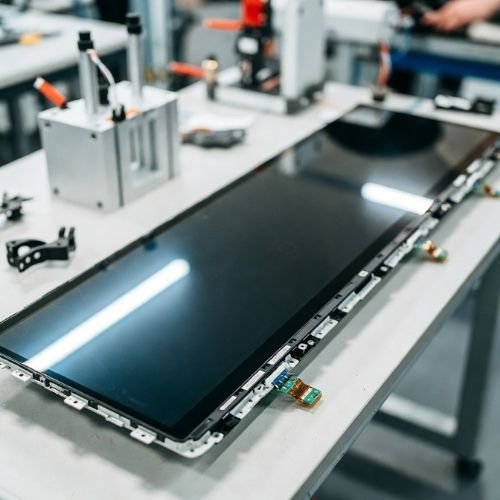
A practical path from operating-environment definition and installation constraints to validated samples and stable supply.
Environment + installation constraints + target performance.
Outline, interface, optical & mechanical alignment.
Samples, integration checks, iterations if needed.
Pilot build support and continuity planning.
Our role is to help customers develop LCD modules suitable for mobile operation, variable environments, and long product life cycles.
These requirements are usually defined by operating environment, installation structure, and service-life expectations — which often makes standard screen catalogs insufficient.
Medium-high to high depending on sunlight exposure and reflections.
Wide, bar-type, square, or custom-outline layouts to match panels.
Vehicle mounting, bezel/bracket structure, enclosure fit constraints.
Long lifecycle planning for transportation programs and sustained supply.
Environmental stability, readability, and long-term consistency.
LVDS, eDP, or HDMI (system platform dependent).
Need a display solution defined around your real operating conditions and installation limits? → Start your custom display project
Transportation and vehicle display projects often involve operating conditions, installation limits, and lifecycle requirements that standard catalog modules cannot fully address.。
Sunlight exposure, vibration, and temperature variation often require the display solution to be defined around real operating conditions, not indoor assumptions.
Dashboards, onboard systems, terminals, and traffic equipment usually involve constrained or irregular structures that do not match standard module layouts..
Brightness, readability, bezel structure, mounting method, and mechanical retention often need to be coordinated as one integrated solution.
Transportation projects usually expect stable performance, sustained supply, and validation planning beyond short-cycle commercial display assumptions.
Engineering value is highest when environment, structure, and lifecycle requirements stack together.
If several of these conditions apply to your project, a custom display approach is usually the safer choice.
Roadside equipment, outdoor terminals, stations.
Dashboards, consoles, constrained housings.
Consistency across temperature and usage cycles.
Onboard HMIs, mobile platforms, industrial vehicles.
Fleet systems and long-term programs.
Non-standard shapes and mounting requirements.
In these cases, customized LCD modules are usually needed to balance visibility, structural fit, and long-term reliability.
Explore adjacent engineering topics and custom development options.
Optical visibility, structural integration, reliability design for real-world environments.
Special-format displays, custom outlines, project-based module development and support.
If you are developing vehicle systems, onboard equipment, transportation terminals, or mobile industrial devices—and your project involves sunlight exposure, vibration, non-standard layouts, or long-term service requirements—we welcome an engineering-level discussion.
Most transportation display projects begin with operating environment, installation constraints, and long-term usage expectations.
To start quickly, please prepare:
Sunlight, temperature range, vibration/movement conditions.
Opening size, mounting points, bezel/bracket needs.
Interface type, controller path, power requirements.
We will contact you within 1 working day, please pay attention to the email with the suffix “@lcdmodulepro.com”.