MDYN R&D & Manufacturing Capabilities

Interface & Power Platform

Standardized LVDS/eDP/MIPI interface and power boards with shared firmware—one scalable platform from small HMI panels to large-format LCD modules.

#LVDS#eDP/MIPI

Design for Integration

Standard connectors, pinouts and mechanical keep-outs make our LCD modules easy to drop into your enclosure—reducing custom work and service cost.

#integratable#maintainable

Display Engine & Tuning

Gamma, color temperature, brightness and uniformity tuning at module level—ensuring every LCD delivers consistent image quality across batches.

#gamma#color#uniformity

Automation & Test Tooling

Custom jigs, aging racks and optical test scripts automate bring-up and verification, delivering repeatable data for every production lot.

#automation#calibration

Opto-Mechanical Design

Cover glass, optical bonding, backlight and structure are co-designed for high-brightness, wide-temperature and vibration-resistant LCD modules.

#bonding#mechanical

Design Documentation

Complete datasheets, 2D/3D drawings, interface timing and test reports make our modules easy to evaluate, integrate and trace over the lifecycle.

#datasheet#traceable

MDYN’s Manufacturing Capabilities

We deliver custom LCD display modules with stable, repeatable quality—built under standardized SOPs, cleanroom assembly practices, optical bonding, automated testing and aging, calibrated output, and full manufacturing traceability from components to shipment.

Business handshake during LCD display module project discussion
STEP 1
Project & Supplier Alignment
  • Goal: build a stable supply base for LCD panels, driver boards, touch modules, cables and power supplies that supports long-term projects.
  • Inputs: MDYN LCD display module specifications, drawings, quality agreements, AQL plans, supplier audits and compliance evidence.
  • Outputs: approved vendor list with verified samples and clear roles for each category of LCD module components.
  • Control: dual-sourcing for key parts, IQC sampling at incoming, and performance scorecards shared with strategic partners.
We start from requirements and suppliers together to secure every LCD module project from day one.
STEP 2
System & Standards Control
  • Goal: manufacture LCD display modules under robust, auditable management systems.
  • Inputs: ISO-based quality and environmental management systems, product safety requirements and customer-specific standards.
  • Outputs: requirement mapping per LCD module series, internal records for audits, and closed-loop corrective actions.
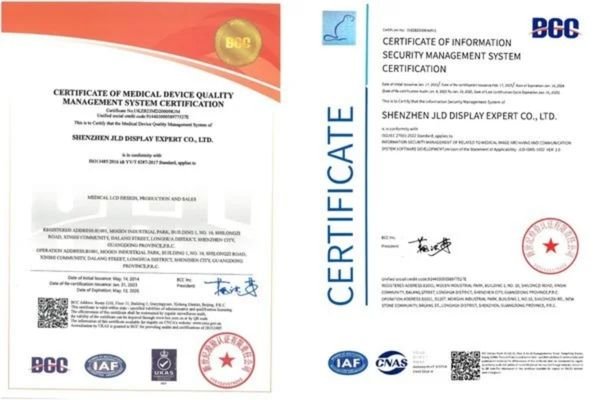
  • Control: regular internal and external audits keep our operations compliant and traceable for global customers.
Standards are integrated into daily manufacturing so every LCD module can be traced back to a controlled process.
Quality management certifications for LCD display module manufacturing
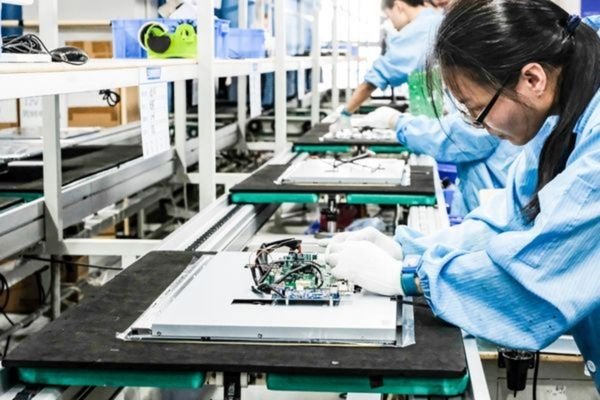
Technician assembling LCD display modules on automated production line
STEP 3
SOP-Based Assembly
  • Goal: assemble every LCD display module consistently, with stable mechanical strength and electrical performance.
  • Inputs: detailed work instructions, assembly fixtures, process parameters for screw torque, adhesive, backlight, and cable routing.
  • Outputs: standardized assembly steps and station checklists for each LCD module size and interface type.
  • Control: key processes have stop-points and sign-off; deviations are recorded, contained and fed back to engineering.
Assembly data can be traced to each LCD display module serial number for future analysis.
STEP 4
Electrical Testing & Tuning
  • Goal: ensure every LCD display module passes interface, function and visual performance targets.
  • Inputs: automated test scripts, LVDS/eDP/MIPI timing parameters, brightness and color targets defined during R&D.
  • Outputs: complete functional test records bound to each serial number, with final parameter sets stored in firmware or configuration files.
  • Control: test benches are calibrated regularly and firmware versions are locked to keep modules consistent in the field.
We validate modules on benches that simulate real applications, then freeze the tested defaults before shipment.
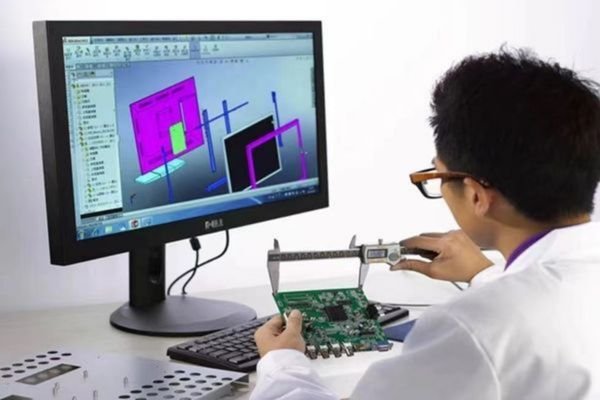
Engineer designing and testing LCD display module hardware and structure
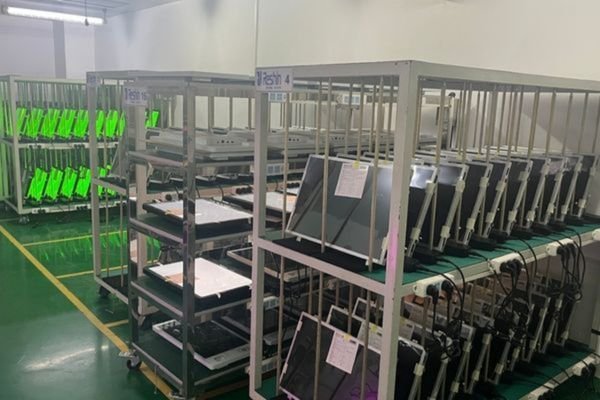
LCD display modules undergoing aging and stability testing
STEP 5
Aging & Reliability
  • Goal: screen out early failures and confirm long-term stability of LCD display modules.
  • Inputs: model-specific aging profiles, operating modes, cycling time and visual inspection checklists.
  • Outputs: pass labels for stable units, exception logs for abnormal modules and feedback data for engineering improvement.
  • Control: scripted aging cycles and clear pass/fail criteria defined per LCD module model.
The first hours of LCD module operation are completed in our lab, not at your customer’s site.
STEP 6
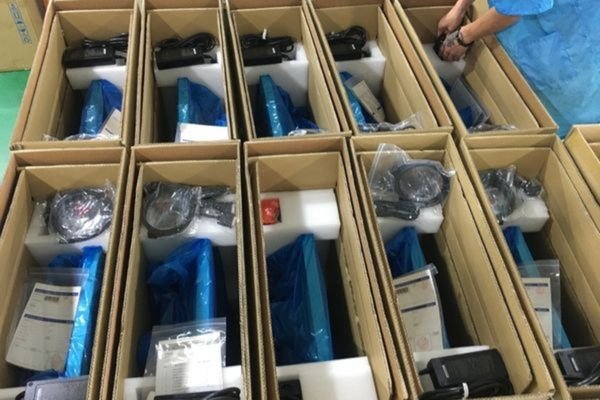
Protective Packing
  • Goal: protect LCD display modules in transit and ensure all accessories ship complete.
  • Inputs: packing specifications per model, foam and edge protection design, accessory and document checklists.
  • Outputs: labeled cartons with serial numbers, batch numbers and accessory verification records.
  • Control: packing inspections on station and random drop/tilt checks for new or optimized packaging designs.
Standardized kits by LCD module model help your production line install quickly and accurately.
Packed LCD display modules prepared for shipment
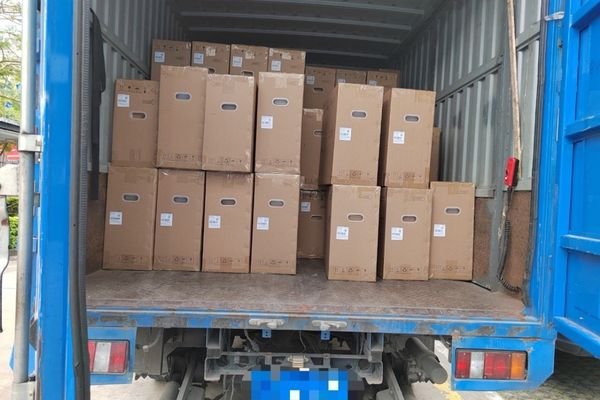
Bulk shipment of LCD display modules ready for delivery
STEP 7
Logistics & Shipment
  • Goal: deliver LCD display modules safely and on time to global customers.
  • Inputs: shipping instructions, palletizing plans, carton stacking limits and required customs documents.
  • Outputs: shipment batches with tracking numbers, packing lists and handling notes shared in advance.
  • Control: shipment status is monitored end-to-end with proof-of-delivery archived for each batch.
From small pilot runs to volume orders, our logistics setup scales with your LCD module demand.
STEP 8
After-sales & Feedback Loop
  • Goal: close the loop quickly on any LCD display module issue and feed learning back into design and production.
  • Inputs: field descriptions, serial numbers, photos or videos, logs and application details from customers.
  • Outputs: analysis records, temporary and permanent corrective actions, and release notes when firmware or process is updated.
  • Control: each case is linked to build data, with owners and due dates tracked in MDYN’s service system.
Every LCD module in the field stays connected to our engineering team through structured feedback.
Office environment of LCD display module engineering and operations team

FAQ

Can MDYN customize LCD display modules for my project?

Yes. We support custom sizes, resolutions, brightness, interfaces (LVDS/eDP/MIPI), structure and accessories, based on your drawings, specs or sample.

We can provide engineering samples and small pilot runs first. The MOQ depends on panel availability and project complexity and will be confirmed in the quotation.

For standard or close-to-standard modules, lead time is usually 4–6 weeks after order. For new custom designs, add the R&D and validation phase agreed in the project plan.

We run SOP-based assembly, 100% functional tests, aging tests, and model-based inspections, with all key data traceable to each serial number.

Our LCD display module production runs under ISO-based management systems and follows relevant safety and environmental requirements for global markets.

We support LVDS, eDP and MIPI interfaces. Timing, signals and power are verified on test benches according to your mainboard or system requirements.

We offer technical support, failure analysis and repair/replacement according to the agreed terms, and use field feedback to improve design and manufacturing.

Our LCD display modules are widely used in industrial HMI, medical devices, smart equipment, charging stations, instrumentation, and custom embedded systems.

We manage BOMs, alternative components and supplier planning to support long-term availability, and communicate proactively if any changes occur.

Submit Your Project Requirements

Tell us your display requirements—size, brightness, interface, and application.
Our engineering team will respond within 24 hours with the best LCD module solution for your project.

Ask For A Quick Quote

We will contact you within 1 working day, please pay attention to the email with the suffix “@lcdmodulepro.com”