
Selecting an LCD display module for marine equipment requires more than standard industrial display thinking. In marine environments, humidity, condensation, salt fog, and repeated temperature changes are normal operating conditions rather than occasional risks. These factors can gradually damage electrical connections, optical layers, sealing structures, and bonding materials if the LCD module is not designed with sufficient environmental margin.
Choosing a moisture-resistant LCD for marine use requires a system-level evaluation of sealing design, material durability, optical bonding stability, and long-term resistance to humidity, salt exposure, and thermal cycling. A reliable selection should be based not only on datasheet specifications, but also on evidence that the module can maintain stable performance in real marine conditions.
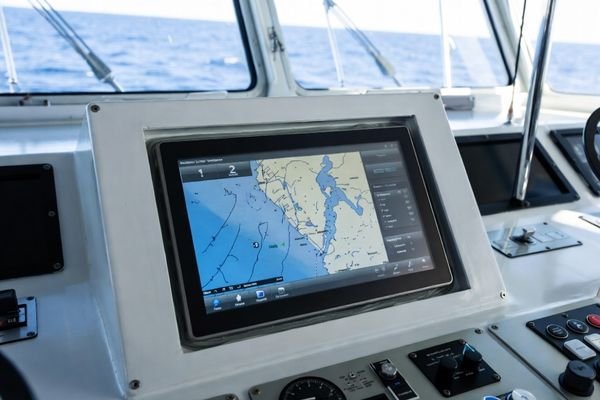
Based on my LCD display module integration experience at LCD Module Pro, marine projects often expose weaknesses that are not obvious in standard indoor validation. A display may perform well in a short lab test, but fail much earlier in the field when moisture enters through weak sealing points, when salt-laden air accelerates corrosion, or when repeated thermal changes cause condensation inside the enclosure.
That is why marine LCD selection1 should focus on long-term field reliability rather than only initial display performance. Engineers need to assess not just brightness, resolution, and interface compatibility, but also how the module will behave over time inside the final enclosure and operating environment. A well-chosen module should remain readable, electrically stable, and structurally reliable throughout its service life.
Why Is Moisture Resistance Critical for Marine LCD Display Modules?
Moisture resistance is critical in marine LCD modules because humidity, condensation, and salt fog can degrade both the optical system and the electrical structure over time.
Moisture resistance is critical because humidity, condensation, and salt spray can attack an LCD module’s electrical integrity, optical clarity, and bonding strength. If these risks are not properly controlled, the result can be corrosion, fogging, unstable performance, and premature failure in safety-critical marine equipment.
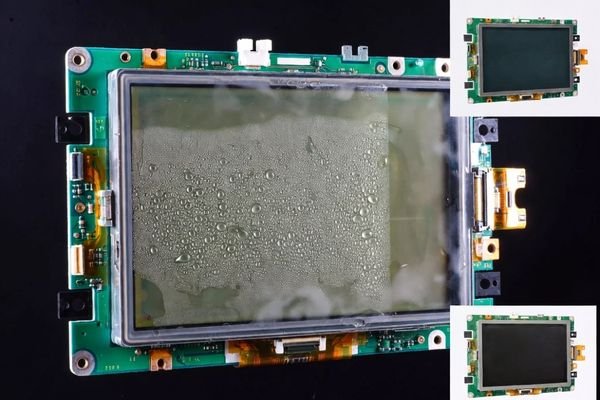
When I discuss marine display selection with equipment designers, I usually emphasize that moisture is not a single failure mechanism. It is a stress factor that can trigger multiple problems across different parts of the LCD module.
Protecting Long-Term Electrical and Optical Stability
Moisture combined with salt is especially damaging in marine electronics. It can corrode fine-pitch FPC traces, reduce connector reliability, weaken insulation performance, and contaminate backlight structures. On the optical side, trapped moisture can lead to fogging, haze, mura, or contrast loss, all of which reduce readability and long-term image quality.
Reducing Field Failures and Service Risk
Marine equipment is often used in locations where service access is limited, expensive, or operationally disruptive. A display failure can affect monitoring, control, or navigation functions and may create avoidable maintenance events. Selecting a moisture-resistant LCD module2 from the start helps reduce unexpected field failures, lowers service burden, and improves confidence in long-term system reliability.
What Environmental Risks Should You Evaluate Before Selecting a Marine LCD Module?
A marine LCD module should be selected based on its actual installation environment, not only on a generic “marine use” label.
Before selecting a module, engineers should evaluate the specific environmental risks at the final installation point, including ambient humidity, condensation potential, salt fog exposure, direct spray, enclosure sealing quality, sunlight load, and temperature cycling. These factors define the real protection level the LCD module must achieve.
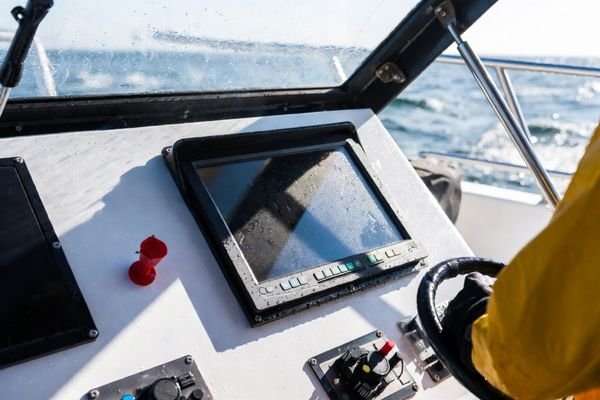
From an engineering standpoint, I always recommend defining the environmental profile before reviewing product options. A display in a protected bridge console, a deck-mounted control panel, and a semi-sealed marine instrumentation enclosure may all be described as marine applications, but their actual moisture exposure can differ significantly.
The interaction between environmental factors is especially important. High humidity combined with rapid temperature swings can create internal condensation even inside a sealed enclosure. Salt fog combined with mechanical gaps or weak sealing can accelerate corrosion around connectors, mounting points, or exposed conductive parts. Strong sunlight can raise internal temperature, which increases stress on adhesives and sealing materials when humidity is also present.
A sound marine LCD selection process therefore starts with installation-specific risk analysis3. The goal is to choose a module with enough durability margin for the real operating environment, not just for a simplified lab condition.
Which LCD Module Design Features Improve Moisture Resistance in Marine Applications?
Moisture resistance in marine LCD modules depends on structural design details, material stability, and manufacturing quality working together.
Key design features that improve moisture resistance include high-quality optical bonding, robust edge sealing, corrosion-aware material selection, protected connectors and electronics, and a backlight structure designed to resist contamination and humidity-related degradation. These features help reduce moisture ingress paths and improve long-term reliability in marine environments.
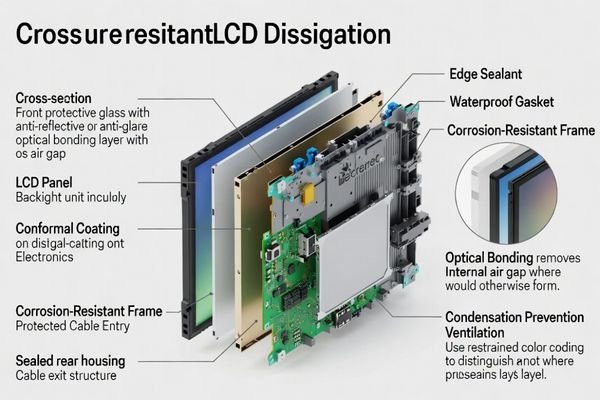
In practical projects, I recommend looking for design features that create multiple barriers against moisture rather than relying on a single protective measure. A module intended for marine deployment should be evaluated as a complete structure, not only as a display panel.
| Design Feature | Benefit in Marine Environment | Key Engineering Consideration |
|---|---|---|
| Optical Bonding | Reduces internal air gaps, helping prevent fogging and improving readability. | The bonding material should remain stable under humidity, UV exposure, and thermal cycling without yellowing or delaminating. |
| Edge Sealing | Helps prevent moisture from entering through the perimeter of the display structure. | The seal must maintain adhesion and integrity after long-term exposure to humidity and salt fog. |
| Corrosion-Resistant Materials4 | Improves durability of bezels, frames, and mounting structures in salty environments. | Material compatibility should be reviewed to reduce galvanic corrosion risk. |
| Protected Electronics | Helps shield driver boards, FPCs, and sensitive circuits from moisture and salt contamination. | Conformal coating or structural shielding must be applied consistently without creating service or connector issues. |
A well-designed module should also minimize moisture ingress paths around the cover lens, FPC exit area, connector zone, and mounting interfaces. These details often determine whether the module remains stable after long-term exposure rather than only during early testing.
How Do You Verify Whether an LCD Display Module Is Suitable for Long-Term Marine Use?
A marine LCD module should be validated with reliability evidence, not selected on specifications alone.
Verification for marine use should include a review of humidity testing, salt fog exposure, temperature cycling, optical stability, adhesive durability, and electrical reliability under moisture stress. Datasheet claims are useful, but they are not sufficient without supporting validation data or application-specific sample testing.

When I help customers qualify a display module for harsh environments, I usually focus on evidence that reflects long-term field behavior rather than only basic pass/fail results. The key question is not simply whether the module survives a test, but whether it continues to maintain image quality, sealing integrity, and stable electrical performance afterward.
Reviewing Environmental Test Reports
Engineers should request and review available environmental test data5, such as damp heat, salt fog, and temperature cycling results. It is important to look beyond the test label and examine what changed after exposure. Brightness shift, fogging, discoloration, mura, adhesive edge lifting, connector corrosion, or insulation degradation are all relevant indicators when evaluating a module for marine use.
Conducting Application-Specific Validation
The most reliable qualification method is to test the LCD module in a setup that reflects the actual product design. This can include the prototype enclosure, thermal behavior, ventilation path, and expected operating cycle. System-level validation is especially important because enclosure sealing, internal heat buildup, and trapped humidity can all affect field performance even when the module itself appears robust in isolation.
How Do You Balance Reliability, Visibility, and Integration When Choosing a Marine LCD Module?
The best marine LCD module is the one that balances environmental reliability, visibility, and integration requirements at the system level.
Choosing the right marine LCD involves balancing moisture resistance with sunlight readability, viewing angle, power and thermal behavior, interface compatibility, and mechanical integration. A successful selection is not the highest-spec module in one category, but the module that best fits the complete operating system.
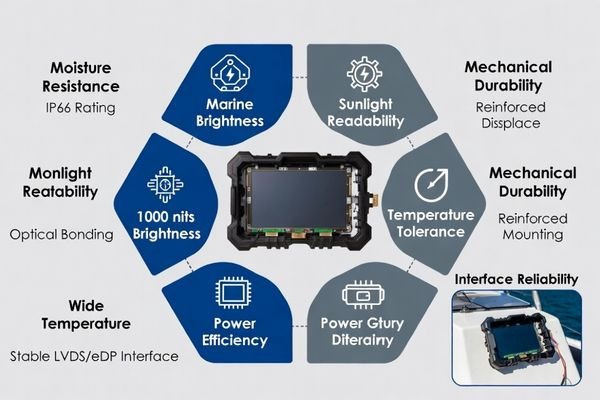
From an engineering perspective, marine display selection is a trade-off process. For example, high brightness is often necessary for outdoor readability, but more backlight power also increases internal heat. In a sealed or semi-sealed enclosure, that heat can accelerate adhesive aging and increase moisture-related stress if thermal management is not properly considered.
Optical bonding is another good example. It improves readability and helps reduce internal condensation risk, but it must remain stable under humidity, salt exposure, and repeated temperature changes. The interface choice also matters. LVDS, eDP, or other display signal paths must be integrated in a way that maintains stable operation over the required cable length and in the expected electrical environment.
A sound selection decision should therefore consider total system fit. The LCD module should remain readable in bright conditions, resist moisture-related degradation, integrate cleanly with the host system, and maintain stable performance over the expected service life. That system-level approach is usually what separates a workable display from a truly reliable marine display solution.
FAQ
What makes an LCD display module moisture-resistant in marine equipment?
A moisture-resistant LCD display module usually combines strong sealing design, stable bonding materials, corrosion-aware structure, protected connectors, and proven reliability under humidity and salt exposure.
Is high brightness enough for marine display selection?
No. High brightness improves visibility, but marine selection must also consider humidity resistance, condensation risk, corrosion control, thermal behavior, and long-term optical stability.
Why is condensation such an important issue in marine LCD applications?
Condensation can cause fogging, corrosion, insulation instability, and degradation of optical or adhesive layers, even when the module is installed inside an enclosure.
What tests should engineers review before approving a marine LCD module?
Engineers should review humidity testing, salt fog exposure, temperature cycling, insulation reliability, adhesive aging, and sample validation results based on the actual installation environment.
Can optical bonding help in marine environments?
Yes. Optical bonding can improve readability and reduce internal reflection, but its long-term durability under humidity, salt exposure, and thermal cycling must also be verified.
Should marine LCD selection focus more on the module or the enclosure?
Both matter. A strong module helps resist moisture-related failure, but enclosure sealing, ventilation, drainage, and thermal design also directly affect long-term field performance.
Conclusion
Choosing a moisture-resistant LCD display module for marine equipment requires a disciplined engineering approach. It is not enough to select a module based only on brightness, resolution, or a general rugged label. The better method is to evaluate the real environmental risks, review the structural features that improve moisture resistance, verify long-term reliability through relevant testing, and balance those findings with visibility and integration requirements.
At LCD Module Pro, I recommend evaluating marine display projects at the system level rather than treating the LCD module as an isolated component. When engineers assess the installation environment, enclosure behavior, optical structure, and long-term reliability evidence together, they make better decisions and reduce field failure risk. This approach helps deliver an LCD display solution that remains clear, stable, and dependable in humid, salty, and temperature-variable marine conditions.
✉️ info@lcdmodulepro.com
🌐 https://lcdmodulepro.com/
-
Understanding the key factors in marine LCD selection can help ensure long-term reliability in harsh environments. ↩
-
Explore this link to understand how moisture-resistant LCD modules enhance reliability and reduce maintenance in marine environments. ↩
-
This resource will guide you through effective risk analysis techniques, ensuring you choose the right equipment for harsh marine environments. ↩
-
Learn about the significance of Corrosion-Resistant Materials in extending the lifespan of marine equipment in harsh environments. ↩
-
Understanding best practices in reviewing environmental test data can help ensure the reliability of display modules in harsh conditions. ↩