
Choosing an LCD display module for a power distribution cabinet status display requires more than selecting a panel that fits the front cutout. In this type of industrial application, function, readability, reliability, and long-term integration stability are more important than cosmetic specifications. These displays are not designed for entertainment-style graphics. They serve as operational HMIs that present electrical status, alarms, load conditions, and switching information that operators must read quickly and correctly.
To choose an LCD display module for a power distribution cabinet status display, engineers should prioritize readability, wide viewing angles, interface compatibility, environmental reliability, and stable 24/7 operation. The best module is the one that delivers clear and dependable information under real industrial conditions, not simply the one with the highest brightness or resolution on paper.
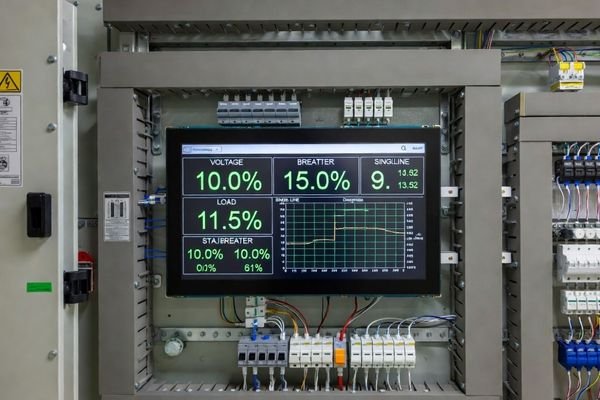
Based on my LCD display module integration work at LCD Module Pro, I usually advise customers to treat cabinet displays as functional industrial interfaces rather than as general-purpose screens. The main objective is to present data such as electrical status, alarms, load current, and switching conditions in a way that remains easy to read from different positions and under variable room lighting. In practical cabinet projects, readability is usually more important than headline display specifications.
A reliable selection process requires a full-system view. The LCD display module1 should be evaluated together with the host controller, the cabinet power environment, the mounting constraints, the ambient light conditions, the service life target, and the maintenance strategy. A module that performs well in a lab demonstration can still become a weak point if it is not matched properly to the thermal, electrical, and operational realities of a 24/7 industrial cabinet application.
What Are the Display Requirements of Power Distribution Cabinet Status Displays?
The display requirements of a power distribution cabinet status display are primarily functional. The screen is expected to provide a clear, stable, and reliable view of the cabinet’s operating state rather than to deliver high-end visual effects.
The core requirements for this type of LCD display module are clear text and numerical rendering, stable long-term readability, and reliable compatibility with industrial control systems. The priority is accurate status presentation, not graphic performance for consumer-style content.
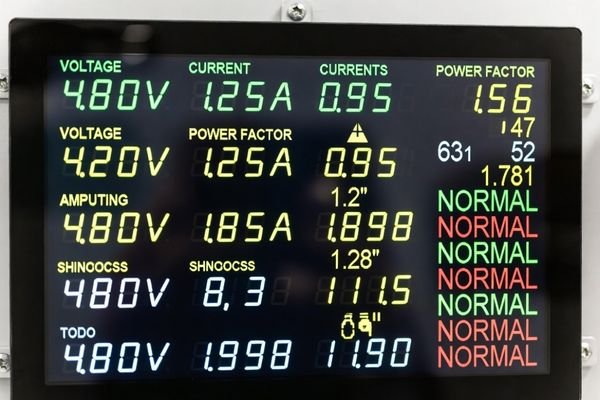
When I work with system integrators on cabinet projects, I usually begin by defining the actual display task. What information must be shown at all times? Which values are critical? How quickly does an operator need to recognize an abnormal condition? These questions help determine whether the module needs to emphasize larger characters, stronger contrast, wider viewing angles, or a more compact multi-parameter layout.
For most cabinet status displays2, the content is visually simple but operationally important. Typical screens show voltage, current, switching state, warning messages, and maintenance prompts. Because of that, the LCD display module should be selected for legibility, stable contrast, and long-term consistency rather than for fast video handling or decorative image quality. A good cabinet display is one that keeps important information clear and unambiguous throughout the equipment lifecycle.
Which Optical and Readability Factors Matter Most?
For a power distribution cabinet status display, readability is one of the most important engineering criteria. Operators often need to identify values, icons, and warning states quickly, and they may do so while standing, moving, or checking multiple cabinets in sequence.
The most important optical factors are stable contrast, wide viewing angle, effective anti-glare performance, and consistent backlight uniformity. These characteristics often matter more than raw brightness because they determine whether the displayed information remains readable under real installation conditions.
From an engineering perspective, brightness alone does not guarantee usability. In many electrical rooms and industrial control areas, reflective surfaces and overhead lighting can reduce the effective readability of the screen. For that reason, anti-glare treatment and optical design should be evaluated together with brightness. A module with moderate brightness but better reflection control may perform better in practice than a brighter module with poor surface treatment.
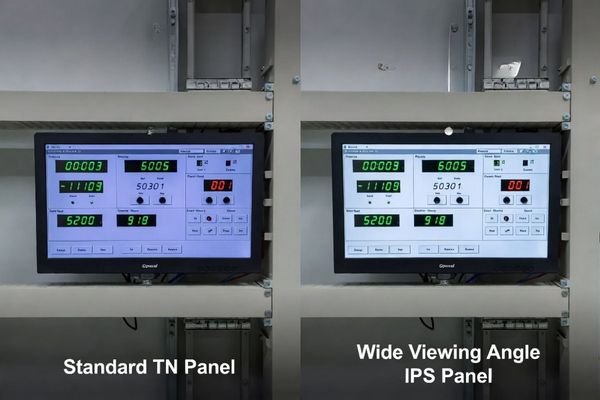
I often recommend IPS-based LCD display modules3 for cabinet applications because wide viewing angle is essential in real operating conditions. Operators rarely view cabinet screens perfectly head-on. They may read them from standing height, from a side angle, or while moving between adjacent units. A wide viewing angle helps preserve text contrast, icon visibility, and overall interface stability across these off-axis positions. A module that is clear only when viewed directly in front of the screen is usually a higher integration risk in cabinet deployments.
How Do Interface, Resolution, and Screen Size Affect Integration?
A suitable LCD display module must match the cabinet both mechanically and electrically. In most projects, integration risk comes not from the panel itself, but from mismatches between screen size, resolution, interface assumptions, and controller capability.
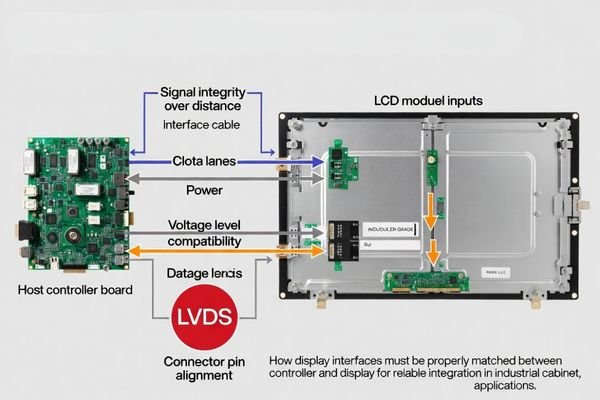
Screen size and resolution should be selected according to viewing distance, UI density, and front-panel space, while the display interface must match the host controller in terms of signal type, timing, voltage level, and connector definition. A module that fits mechanically may still fail electrically or functionally if these checks are incomplete.
In practical cabinet projects, the correct size is the one that allows the interface to remain easy to scan without wasting front-panel space. The resolution should be high enough to render text and symbols clearly, but not so dense that the UI becomes harder to read at a glance. For cabinet status displays, readability is usually more important than maximum pixel density.
The electrical interface should be verified early in the project. Whether the controller uses LVDS, eDP, or another embedded display link, the engineering team should confirm more than just the interface name. Connector pinout, timing parameters, lane configuration, voltage levels, and startup behavior all matter. In most field applications, integration mismatch is a greater risk than insufficient resolution. If you need assistance reviewing compatibility between your host controller and an LCD display module, our team can help evaluate the specifications; you can reach us at info@lcdmodulepro.com.
| Factor | Integration Consideration | Recommendation for Cabinet Displays |
|---|---|---|
| Screen Size | Must fit the front-panel opening and support a clear, uncluttered layout. | Select according to UI structure, operator viewing distance, and available cabinet space. |
| Resolution | Must support clear text and symbols without making the interface overly dense. | Match resolution to UI density and reading distance rather than choosing the highest available value. |
| Interface | Must be electrically and functionally compatible with the host controller. | Verify interface type4, timing, connector definition, signal voltage, and startup compatibility before final selection. |
What Reliability and Environmental Conditions Should You Verify?
Power distribution cabinets are expected to operate continuously for long periods, often in industrial environments with elevated temperature, electrical noise, and limited maintenance access. For this reason, reliability and environmental suitability are often more important than nominal display performance.
Before finalizing the LCD display module, engineers should verify operating temperature range, backlight lifetime, power-on stability, EMI and ESD robustness, and long-term supply continuity. In industrial cabinet projects, these factors are often more critical than primary optical specifications.
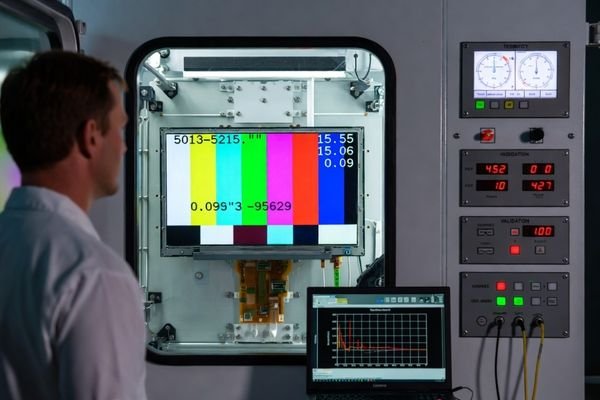
When I review a module for a cabinet application, I pay close attention to the real operating environment inside the enclosure. Even when the cabinet is installed indoors, the internal thermal load may be much higher than ambient room temperature because of nearby electrical equipment. A module that performs well under commercial indoor conditions may still become unstable if it has not been validated for the cabinet’s actual thermal profile.
Thermal and Environmental Stress
The LCD display module should be checked against the expected operating and storage temperature range of the cabinet system. Internal heat rise, dust, and long operating hours can all affect performance and lifetime. Environmental suitability should therefore be reviewed as part of the selection process rather than left to later validation. A technically acceptable module on paper can still become unreliable if it is exposed to thermal conditions outside its stable operating range.
Electrical and Long-Term Reliability
The electrical environment inside a power distribution cabinet can be noisy, so EMI resistance and ESD robustness5 are important selection criteria. Repeated power cycling and long-duration operation should also be considered. Backlight lifetime is another major factor because the display may run continuously for years. In addition, lifecycle planning matters: the module should come from a supplier that can support long-term availability and reduce future maintenance risk. For cabinet status displays, supply continuity is not just a purchasing issue; it is part of long-term service reliability.
How Should You Evaluate the Full Selection Strategy for Cabinet Status Displays?
A reliable selection strategy should begin with the cabinet’s actual display task and then translate those needs into optical, electrical, mechanical, and lifecycle requirements. The process works best when the LCD display module is treated as part of the full cabinet system rather than as an isolated component.
A complete selection strategy starts with what the display must show, how it will be viewed, where it will operate, and how it will be integrated. From there, engineers should evaluate readability, interface compatibility, environmental reliability, mechanical fit, and maintenance continuity as one coordinated system.
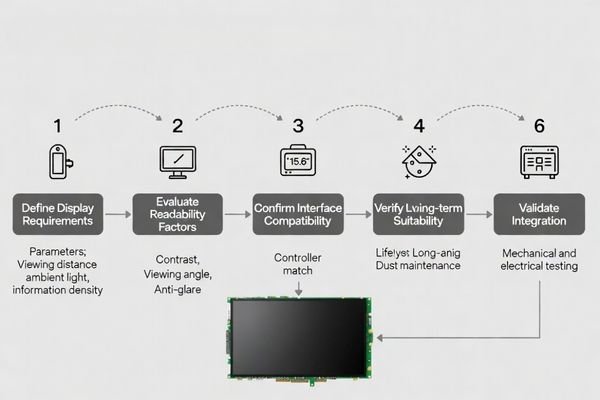
In the projects I support, the best selection process does not begin with a catalog page. It begins with a structured definition of the application. Engineers should first determine the critical data to be displayed, the required character size, the viewing distance, the likely viewing angle, and the ambient lighting conditions. Next, they should verify the available front-panel space, mounting depth, interface compatibility, and power architecture. Only after those requirements are clear should the actual LCD display module candidates be compared.
A strong strategy also includes long-term thinking6. The selected module should not only perform well at the prototype stage but also support production continuity, future maintenance, and low field-replacement risk. For cabinet status displays, the best module is not simply the brightest or highest-resolution option. It is the one that gives stable readability, clean integration, dependable 24/7 operation, and manageable lifecycle support in the real application environment.
FAQ
What screen size is usually suitable for a power distribution cabinet status display?
The suitable size depends on how much information must be shown, the operator’s viewing distance, and the available front-panel space. In most cases, the correct size is determined by readability and layout efficiency rather than by appearance alone.
Is a high-brightness LCD module always necessary for cabinet applications?
Not always. If the cabinet is installed in a controlled indoor electrical room, moderate brightness with good contrast and anti-glare performance may be sufficient. Higher brightness becomes more important when ambient light is strong or reflections are difficult to control.
Which interface is better for cabinet display integration?
The better interface is the one that matches the host controller and timing architecture reliably. Engineers should verify not only the interface type itself, but also connector definition, lane configuration, voltage level, and timing compatibility.
Do power distribution cabinet displays need touch functionality?
That depends on the user interface design. If the cabinet uses the screen only for status display, touch may not be necessary. If local parameter setting, alarm acknowledgment, or maintenance interaction is required, touch integration may be worth considering.
Why is viewing angle important for a cabinet status display?
Operators often check cabinet displays from standing height or side positions instead of directly in front of the screen. A wide viewing angle helps maintain stable color, contrast, and text readability under these real operating conditions.
What reliability checks are most important before finalizing the module?
Engineers should verify temperature range, power-on stability, backlight lifetime, EMI and ESD robustness, and long-term availability. These checks are often more important than headline display specifications in industrial cabinet projects.
Conclusion
Choosing an LCD display module for a power distribution cabinet status display requires a disciplined engineering approach. The right decision should prioritize functional clarity, wide viewing angle, interface compatibility, environmental reliability, and long-term service stability rather than focusing only on optical headline specifications.
At LCD Module Pro, I recommend evaluating the LCD display module as part of the complete cabinet system. That means starting with the real display task, verifying the viewing conditions, confirming controller compatibility, and checking whether the module can remain stable in a 24/7 industrial environment over the full equipment lifecycle. A systematic selection process reduces integration risk, improves field reliability, and helps ensure the final cabinet interface remains clear, dependable, and serviceable in long-term operation.
✉️ info@lcdmodulepro.com
🌐 https://lcdmodulepro.com/
-
This resource will guide you in selecting the best LCD display module tailored for your specific industrial needs. ↩
-
Explore this link to understand how to effectively design cabinet status displays for clarity and operational importance. ↩
-
Exploring the advantages of IPS-based LCD modules can help you make informed decisions for optimal display performance in various environments. ↩
-
Exploring this topic will help you ensure compatibility and avoid integration issues in your projects. ↩
-
Exploring this topic will help you grasp the significance of these factors in maintaining reliable electronic performance. ↩
-
Discover insights on how long-term thinking can enhance project outcomes and ensure sustainability in your selections. ↩